
Electrical Education
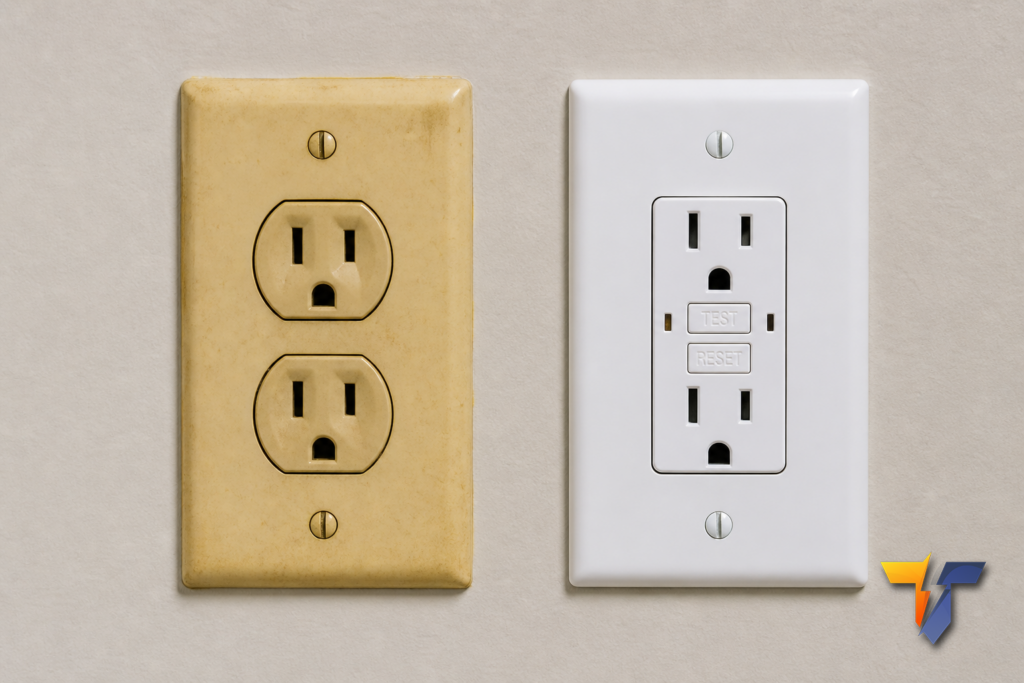
By Brent Allen Strawhacker | Marketing Director, T.A.P. Electric | West Burlington, IowaGFCI protection is one of the most important — and most misunderstood — safety features in a modern home. If you’ve ever pressed that little “Test” and “Reset” button on an outlet near your kitchen sink or bathroom vanity, you’ve already interacted with it. But most homeowners don’t know exactly how it works, where the NEC actually requires it, or what happens when it’s missing. This post covers all of it.
Ground Fault Circuit Interrupter protection — GFCI for short — has been required by the National Electrical Code in certain areas of the home since the 1970s, and those requirements have expanded significantly with every code cycle since. Older homes often don’t have it where they should. Newer homes sometimes have it installed incorrectly. And a surprising number of homeowners aren’t sure whether their home is up to current standards.
As a licensed master electrician serving Southeast Iowa and West Central Illinois, we deal with GFCI questions on a regular basis — during service calls, home inspections, and panel replacement work. Here’s a plain-English breakdown of everything you need to know.
What Is a Ground Fault — and Why Does It Matter?
A ground fault happens when electrical current takes an unintended path to the ground — and that path is often through a person. It doesn’t take much. As little as 10 milliamps of current passing through the human body can cause muscle paralysis. At 100 milliamps — a fraction of what flows through a standard 15-amp circuit — it can be fatal.
Ground faults most commonly happen when electrical equipment gets wet, when insulation is damaged, or when someone touches a live conductor while also in contact with a grounded surface. Near water — a kitchen sink, a bathroom vanity, a bathtub, an outdoor receptacle — the risk is especially high.
A standard breaker won’t save you in this scenario. Breakers protect against overcurrent — too much current flowing through a wire. They’re not fast enough or sensitive enough to respond to the kind of small, fast ground fault that electrocutes a person. That’s exactly what GFCI protection is designed to handle.
How Does GFCI Protection Actually Work?
A GFCI device constantly monitors the current flowing out on the hot wire and returning on the neutral wire. Under normal conditions, those two values are equal. The moment there’s an imbalance — even as small as 4 to 6 milliamps — the GFCI interprets that as current leaking somewhere it shouldn’t be, and it trips the circuit in as little as 1/40th of a second.
That’s fast enough to prevent electrocution in most cases.
GFCI protection comes in a few forms:
- GFCI Outlet (Receptacle): The most familiar form — the outlet with the Test and Reset buttons. One GFCI outlet can also protect additional standard outlets downstream on the same circuit if wired correctly.
- GFCI Circuit Breaker: Installed in the panel, it protects every outlet and device on that entire circuit. More expensive than a single GFCI outlet but covers an entire circuit from one point.
- Portable GFCI: A plug-in device used for temporary protection, common on job sites. Not a substitute for permanent installation in a home.
Where Does the NEC Require GFCI Protection in a Home?
The National Electrical Code sets the minimum requirements for GFCI protection. In Iowa, local jurisdictions adopt the NEC — often a cycle or two behind the current edition — so exact requirements can vary slightly depending on your municipality. When in doubt, the safest and most insurable approach is to meet current NEC standards regardless of when your home was built.
Here’s where GFCI protection is required:
Bathrooms
All receptacles in bathrooms require GFCI protection. No exceptions. This has been a requirement since 1975 and applies to every outlet within the bathroom — regardless of distance from the sink or tub. If your bathroom outlets don’t have GFCI protection and your home was built before the mid-1970s, there’s a good chance they were never updated.
Kitchens
All receptacles that serve countertop surfaces in kitchens require GFCI protection. This includes the outlets along your backsplash, island, and any other surface where small appliances are used. The requirement has been in the NEC since 1978 and has expanded over the years. Current code also requires GFCI protection for receptacles within 6 feet of a kitchen sink, even if they don’t serve a countertop surface directly.
Garages and Accessory Buildings
All 125-volt, 15- and 20-amp receptacles in garages and detached buildings that have a floor at or below grade level require GFCI protection. This has been required since 1978. The exception historically applied to receptacles dedicated to a single appliance that wasn’t easily moved — like a garage door opener — but current code has tightened that significantly. If you’re unsure, protect it.
Outdoor Receptacles
All outdoor receptacles require GFCI protection. Full stop. This has been required since 1978 for the back and front of the house, and current code extends it to all outdoor receptacles regardless of location. If you have exterior outlets on your home that don’t have GFCI protection — or that aren’t in weatherproof covers — that’s something that needs to be addressed.
Crawl Spaces and Unfinished Basements
Receptacles in unfinished basements and crawl spaces require GFCI protection under current NEC. These areas are damp by nature, which makes ground fault risk real. Many older homes have unprotected receptacles in the basement that were installed before these requirements existed and were never updated. This comes up frequently during home inspections.
Near Swimming Pools, Hot Tubs, and Wet Bar Sinks
Any receptacle within 6 feet of the edge of a swimming pool, hot tub, or spa requires GFCI protection. Receptacles near wet bar sinks follow similar rules to kitchen sinks. Pool and hot tub equipment — pumps, heaters, lighting — has its own set of GFCI and bonding requirements that go beyond simple outlet protection. This is specialized work that requires a licensed electrician familiar with NEC Article 680.
GFCI Requirements at a Glance
| Location | GFCI Required? | Notes |
|---|---|---|
| Bathrooms | Yes | All receptacles, no exceptions |
| Kitchen countertops | Yes | All countertop surface receptacles |
| Within 6 ft of kitchen sink | Yes | Even non-countertop receptacles |
| Garages | Yes | All 15/20-amp 125V receptacles |
| Outdoor receptacles | Yes | All exterior outlets |
| Unfinished basements | Yes | All receptacles |
| Crawl spaces | Yes | All receptacles |
| Within 6 ft of pool or hot tub | Yes | Additional bonding requirements apply |
| Finished living areas | No | Standard rooms, hallways, bedrooms |
Not Sure If Your Home Has Proper GFCI Protection?
T.A.P. Electric serves West Burlington, Burlington, and all of Southeast Iowa and West Central Illinois. Whether you need a single outlet updated or want a full walkthrough of your home’s electrical safety, Troy and the crew will give you a straight answer and a fair price.
Call or text us, or fill out our online request form and we’ll get back to you fast.