
Most people call us about a service upgrade for one of two reasons. Either something stopped keeping up, the lights dim when the AC kicks on, a breaker won’t stop tripping, the old fuse box finally gave them a scare, or they’re adding something the house was never wired for, like a hot tub, a shop, central air, or an EV charger. Either way the question is the same: “Is my electrical service big enough, and if it isn’t, what does it take to fix it?”
Here’s the part most folks don’t know going in. Upgrading a service isn’t just swapping a box on the wall. It’s the whole path the power takes to get into your house, and it comes with a stack of rules from the utility, the inspector, the city, and the National Electric Code that all have to line up. That coordination is exactly the part we take off your plate. This page explains what a service upgrade actually is, how it’s different from a panel upgrade, how to tell if you need one, what it costs, and how we handle it from the first call to the final inspection.
What “electrical service” actually means (and what upgrading it involves)
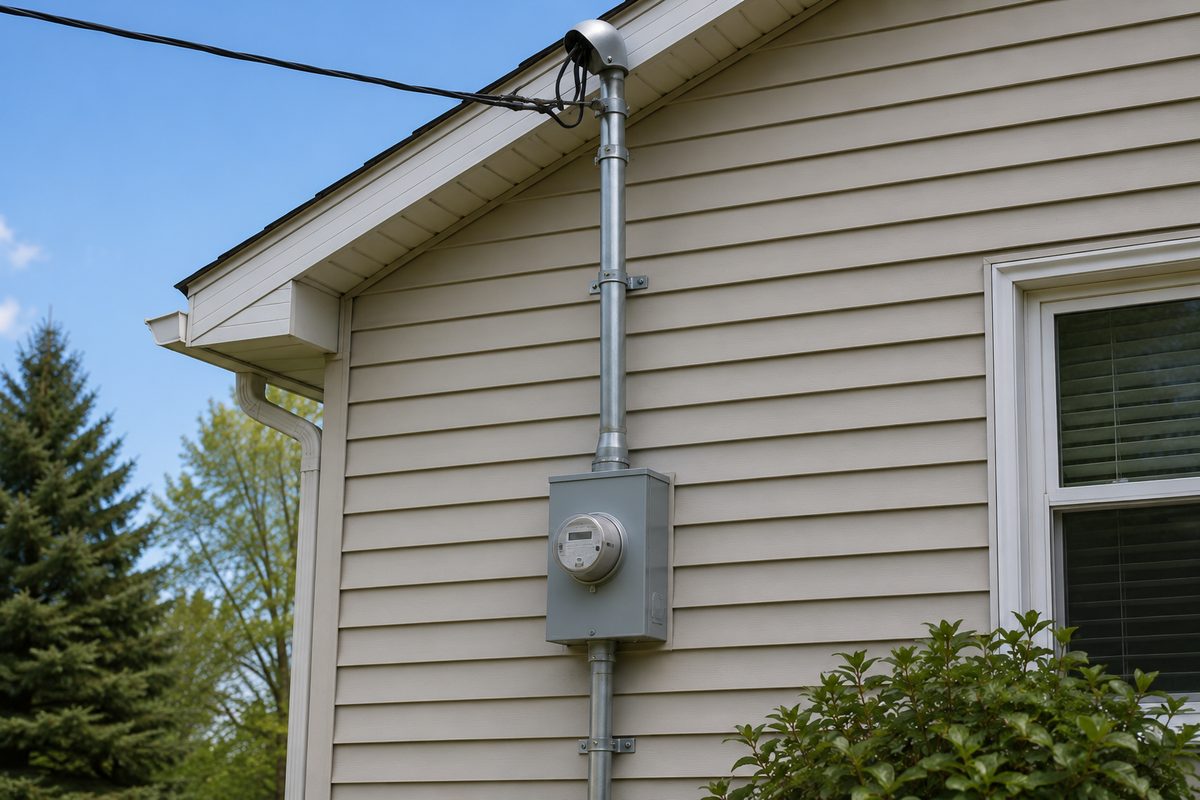
Your electrical service is the capacity coming into your home. It starts where the power reaches your house, either overhead through a mast and weatherhead or underground through a buried line, runs through your meter, into your main breaker, and out to your panel. The size of that service, measured in amps, is the ceiling on how much power your whole house can draw at once. Most older homes around here were built with a 60 or 100 amp service. Many modern homes run 200 amps because there’s simply more plugged in than there used to be.
Upgrading the service means raising that ceiling, usually from 100 amps to 200. That’s a bigger job than it sounds, because raising the capacity means the parts that carry it all have to be sized to match: the mast or underground lateral, the meter, the main breaker, the service feeders, and the grounding and bonding that keep the whole thing safe. When we touch a service, we bring the whole path up to today’s code, not just the one piece that ran out of room.
Is this a service upgrade or a panel upgrade?
This trips people up, so here’s the plain version, because the two jobs get talked about like they’re the same thing and they aren’t.
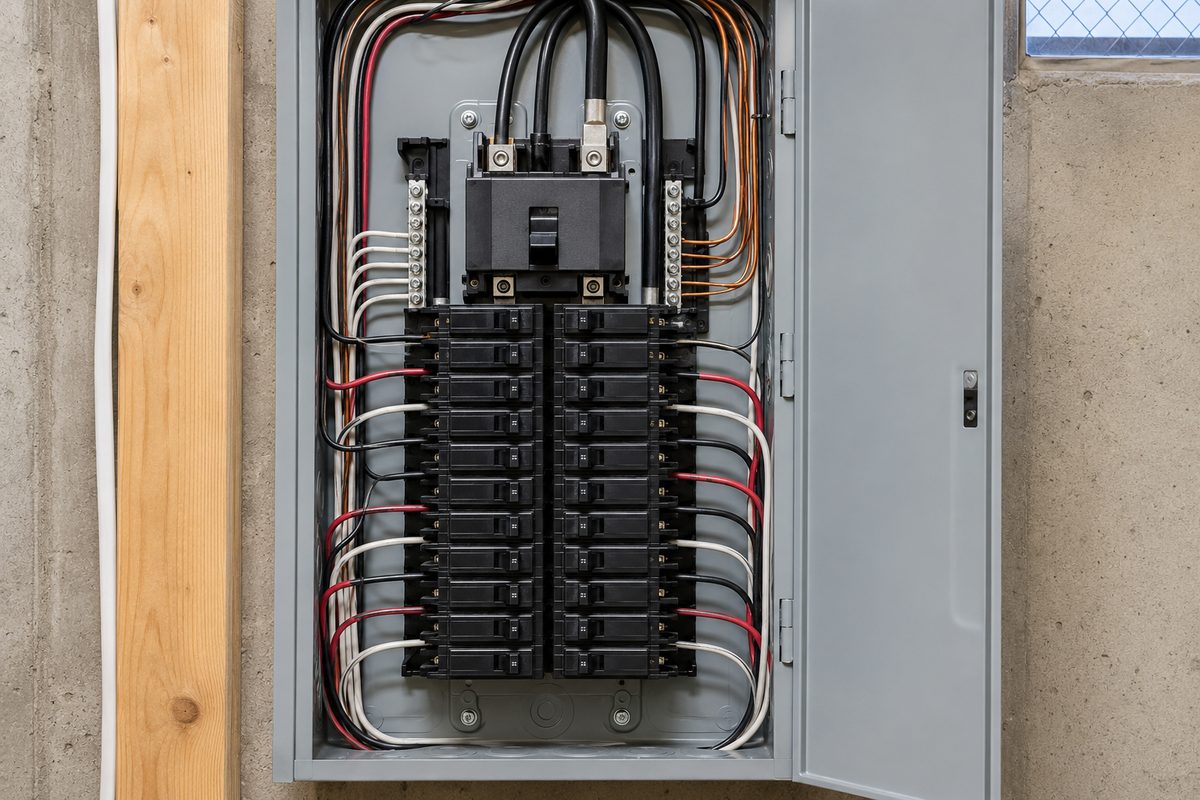
A panel upgrade is about the panel itself, the box with the breakers. You’d replace the panel when it’s a recalled or unsafe brand, when it’s full and you’re out of breaker spaces, or when the panel is damaged, without necessarily changing how much power the house can draw. If that’s your situation, our panel upgrade page covers it.
A service upgrade is about capacity, raising how much power the whole house can pull. A service upgrade almost always includes a new panel too, because the old one usually can’t handle the bigger service, but the reason for the job is the capacity, not the box. The simple test: if you need more power coming into the house, that’s a service upgrade. If the power coming in is fine and it’s the panel or breakers that need attention, that’s a panel upgrade. When you call, we’ll tell you honestly which one your home actually needs.
One more piece that comes up during a service upgrade: whether the power should come in overhead or underground. If yours is getting reworked and that question is on the table, our overhead vs. underground service page walks through how to choose.
How do you know it’s time to upgrade?
A few of the common reasons people call us about this:
- You’re adding a big load the house wasn’t built for. Central air, an EV charger, a hot tub, a welder, a detached shop or garage. A 100 amp service can run out of room fast when you add one of these.
- Your panel is full or you’re on fuses. If there’s no room left for another breaker, or you still have a fuse box, that’s often a sign the whole service is behind the times.
- The lights dim or breakers trip when big things turn on. That can be a capacity problem, a sign the service is working at its limit.
- You’re buying, selling, or insuring an older home. Inspectors and insurers increasingly flag undersized or outdated services, and a 100 amp service can hold up a deal.
- Your service is simply old. Older service entrances often aren’t to current code around grounding, surge protection, and bonding, even when they’re still running.
If you’re not sure which of these fits you, that’s normal. Sorting out whether you actually need a bigger service, or just a panel, is part of what we figure out when we come look.
What does a service upgrade cost?
The honest answer is that it depends on what your home needs, and we’ll show you what we find.
A service upgrade costs more than a straight panel swap because there’s more to it: the size of the new service, the condition of what’s already there, whether the power comes in overhead or underground, how far the run is, what the utility requires at the meter, and what it takes to bring the grounding, bonding, and surge protection up to code. Every one of those moves the number.
What we won’t do is keep the number a secret. We publish real prices on our pricing page, and the price we publish is the price we quote. When we come out and look, you get a written quote before any work starts. If we open things up and find something unexpected, we stop and talk it through with you before we go further.
What we look for, and what can go wrong
A service upgrade is one of those jobs where the difference between a handyman and a licensed electrician actually shows up. A few of the things that matter:
- Grounding and bonding done right. This is the safety heart of the whole service, and it’s easy to get wrong. Done poorly, metal parts of your home, the dryer, the washer, metal water and gas lines, can become energized, or a breaker may never trip during a ground fault. We make sure the grounding is installed correctly and the bond is done once, in the right place. As one example most people never hear: a sub-panel should never be bonded like the main. If you have a sub-panel with the white wire and the bare wire landed on the same bar, that’s not correct, and it creates what’s called objectionable current even if you’ve never had a problem from it.
- Surge protection. Modern services should have surge protection, and it’s now required in many cases. It protects the electronics in your home from the spikes that come through the line.
- Ground rods, understood correctly. A lot of folks think ground rods are what make their breakers trip. They aren’t. Ground rods handle surges, the static discharge from something like a nearby lightning strike. They don’t take a direct hit and they aren’t what trips a breaker during a fault. Getting this right is part of a proper service.
- The permit and inspection. Service work has to be permitted and inspected, and the utility has to be coordinated for the disconnect and reconnect. Skipping any of that isn’t something we do.
None of this is meant to scare you. It’s the nature of the work, and it’s exactly why it’s worth having a licensed electrician handle it.
How T.A.P. handles a service upgrade
Here’s the part that wears people out about this kind of job: the rules. There’s the National Electric Code, the utility company’s requirements, the authority having jurisdiction, and the city, and they don’t always line up neatly. Figuring out who can do the work, who has to be notified, what paperwork is needed, and when the utility can cut and restore power is a job in itself.
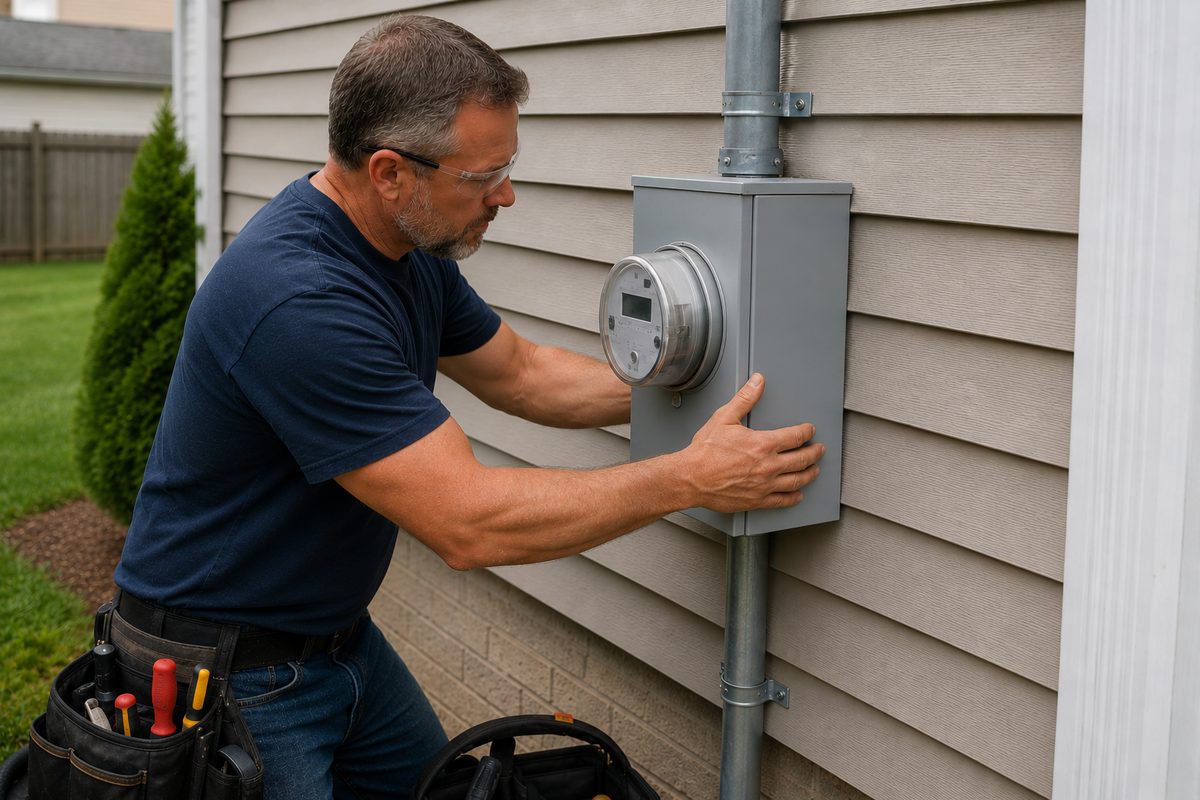
We handle all of it. We do the communication with the utility and the inspector, pull the proper paperwork and licensing, schedule the work around days that fit you, and coordinate the disconnect and reconnect so you’re not left chasing anyone. When you get in touch about a service upgrade, here’s what to expect: upfront pricing, a clear discussion of what has to be done and when, what it takes to bring the service up to code, who your utility and inspector are and what they’ll require, the equipment we’ll install, and the right size for your service. Then a written quote. The goal is simple. You get a bigger, safer, code-current service, and you don’t have to become an expert in any of it to get there.
That includes the city and state permits and the utility locates. On underground work somebody has to call Iowa One Call before anyone digs, and that somebody is us.
Inspection comes before your power comes back. Service work has to pass inspection before the utility will reconnect you. That is the part of the schedule that is not in our hands, and we would rather you hear it from us up front than wonder about it on the day. We schedule the inspection, we meet the inspector, and we coordinate with the power company to get you turned back on.
What goes in, and what comes out. Where the local rules call for an outdoor disconnect, we install one. We bring the grounding up to current code, including ground rods and the grounding electrode conductor, bonding of the metal water pipe, and an intersystem bonding bridge, which is the tie-in point for your cable, satellite and phone. We add whole-home surge protection. The old equipment comes out before we finish. We test everything and verify it is working, and we clean up before we call the job done.
Frequently Asked Questions
What is an electrical service?
Your electrical service is the power capacity coming into your home. It’s the whole path from where the utility line reaches your house, through the meter and main breaker, to your panel, and it’s measured in amps. That amp rating is the ceiling on how much power your house can use at once. Most older homes here were built at 60 or 100 amps; many modern homes run 200.
How do I know if I need a new service?
Common signs: you’re adding a big load like central air, an EV charger, a hot tub, or a shop; your panel is full or you’re still on fuses; the lights dim or breakers trip when big appliances start; or you’re selling or insuring an older home and the service got flagged. If you’re not sure, we’ll tell you honestly when we come look whether you need a bigger service or just a panel.
What’s the difference between a service upgrade and a panel upgrade?
A panel upgrade replaces the panel and breakers, usually because the panel is unsafe, full, or a recalled brand, without changing how much power the house can draw. A service upgrade raises the capacity of the whole service, usually 100 amps to 200, and almost always includes a new panel as part of it. The simple test: more power coming into the house is a service upgrade; the power’s fine but the box needs work is a panel upgrade.
Is a 100 amp service big enough? Is 200 amp?
A 100 amp service is often fine for a smaller home without a lot of large electric loads. Once you add central air, electric heat, an EV charger, a hot tub, or a shop, 100 amps can run out of room, and 200 amps is the common upgrade. The right answer depends on what you’re running now and what you plan to add, which we size for you.
Do I have to upgrade my wiring if I upgrade my service?
Not always. A service upgrade is about the service entrance, meter, main, and panel, not necessarily the branch wiring in your walls. That said, when we’re in there we bring the service up to current code around grounding, bonding, and surge protection, and if we spot an unsafe condition in the existing wiring we’ll show you rather than work around it.
What size panel do I need if I upgrade my service?
It depends on the service size and how many circuits you need now and down the road. A 200 amp service typically pairs with a panel that has plenty of breaker spaces so you’re not full again in a year. If your service is already the right size and it’s really just the panel that needs replacing, that’s a panel upgrade, and our panel upgrade page covers it.
Do I need a permit to upgrade my electrical service?
Yes. Service work has to be permitted and inspected, and the utility has to be coordinated for the disconnect and reconnect. We pull the permits, handle the utility and inspector communication, and meet the inspector as part of the job.
How long does a service upgrade take?
The on-site work is often a day, but the full timeline depends on utility scheduling for the disconnect and reconnect, permit and inspection timing, and what your specific service needs. We give you a realistic schedule with your quote instead of a guess.
Why do I need surge protection?
Surge protection guards the electronics in your home against voltage spikes that come in through the line, and it’s now required in many service installations. It’s a small part of the job that protects a lot of what’s plugged into your house.
Why are electrical services so expensive?
A service upgrade touches a lot of parts, the service entrance, meter, main, feeders, panel, and the grounding, bonding, and surge protection, and it involves the utility, a permit, and an inspection. You’re paying for a licensed electrician to raise your home’s capacity and bring the whole thing up to code safely. We publish our prices so you can see the number before we ever come out.
Can I install my own electrical service?
No. Service work involves the utility’s equipment and disconnect, permitting, inspection, and the kind of grounding and bonding that’s genuinely dangerous to get wrong. It has to be done by a licensed electrician, and for good reason, this is the work that keeps metal parts of your home from becoming energized.
Where should my meter be located?
That depends on your utility’s rules, whether your service is overhead or underground, and your home’s layout, and it’s one of the things we coordinate with the utility as part of the job. If your upgrade also means deciding between overhead and underground service, our overhead vs. underground page walks through that choice.