
The car shows up in the driveway before the charger does. That’s the order it usually happens in. Somebody buys an electric vehicle, gets it home, plugs it into a regular garage outlet that first night, and watches it crawl back to a full charge two and a half days later. Then the phone starts ringing. “Can I get one of those chargers that fills it up overnight?” “Will my house even handle it, or do I need to tear the panel out?” “The dealership handed me a charger in a box, can you just hook it up?”
Those are the real questions, and they’re good ones. A home EV charger is one of the more straightforward jobs we do, but it sits on top of a load calculation and a panel that has to actually support it, and that’s the part folks can’t see from the driveway. This page lays out the plain version: the kinds of charging you’re choosing between, whether your home can carry a fast charger as it sits, what the work costs, what can go wrong, and how we handle an install from the first call to the final inspection.
What a home EV charger actually is (Level 1 versus Level 2)
Charging an electric car at home comes down to two speeds, and the difference is night and day.
Level 1 is the cord that came with the car plugged into a standard 120-volt outlet, the same kind your toaster uses. It works, and for a light driver it might even be enough. The catch is speed. A Level 1 setup adds roughly three to five miles of range per hour, so an overnight charge gets you maybe forty miles back. If your commute is short and your car sits all night, fine. For most households it’s not enough, and that gap is what sends people looking for the next step up.
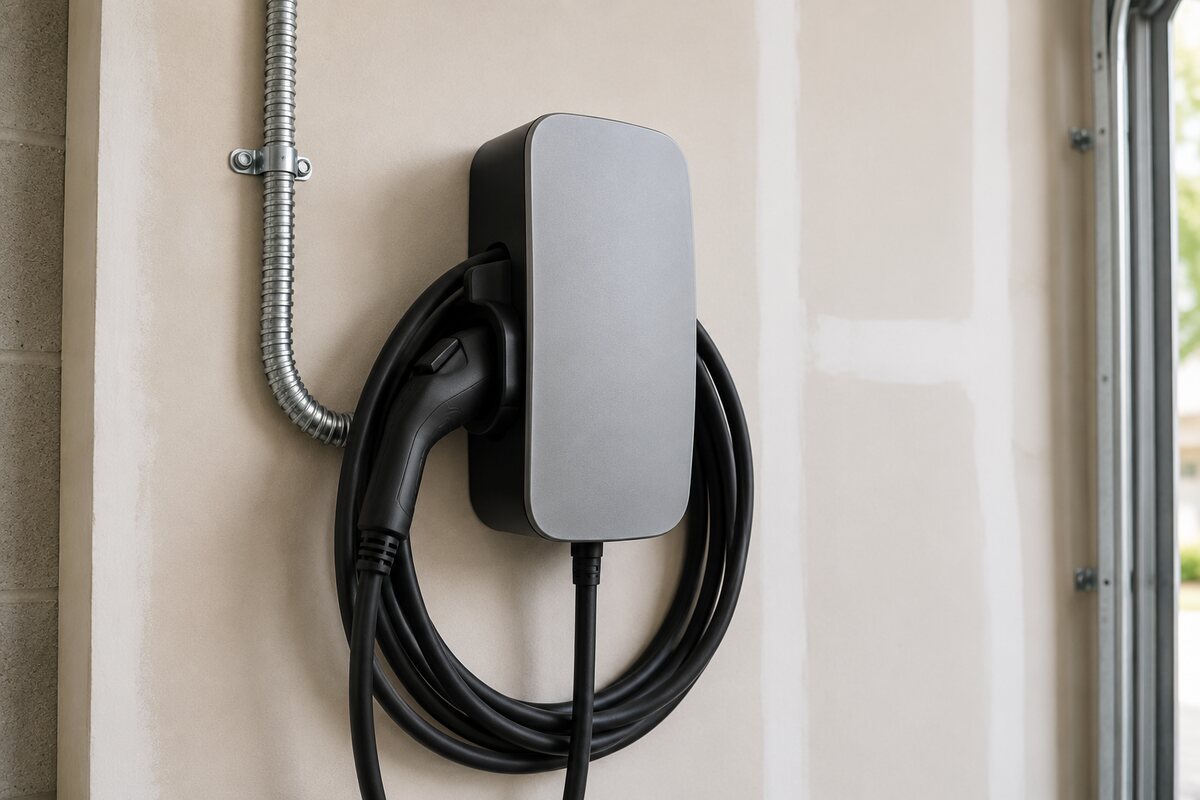
Level 2 is the wall unit you picture when you think “home charger.” It runs on a 240-volt circuit, the same voltage as your electric dryer or range, and it charges four to seven times faster than Level 1. Most drivers wake up to a full battery every morning and never think about it again. This is what we install the vast majority of the time.
Inside Level 2 there’s one more fork: plug-in or hardwired. A plug-in charger hangs on a NEMA 14-50 outlet, the same style outlet an electric range uses, and you can unplug it and take it with you. A hardwired charger is wired straight into the wall, which is the way to go for higher-amperage units, outdoor installs, and anyone who wants the cleanest, most permanent setup. Both are good. Which one fits depends on the charger you have and where it’s going.
Will your home handle it as it sits?
This is the question under the question, and it’s the one worth answering honestly up front.
A Level 2 charger is a big, steady draw. It doesn’t cycle on and off like an air conditioner. When your car is charging, that circuit is pulling hard for hours straight, and electrical code treats that kind of continuous load with extra room built in. A charger set to pull 40 amps needs a 50-amp circuit behind it. A 48-amp charger needs a 60-amp circuit. Your panel has to have that room to give.
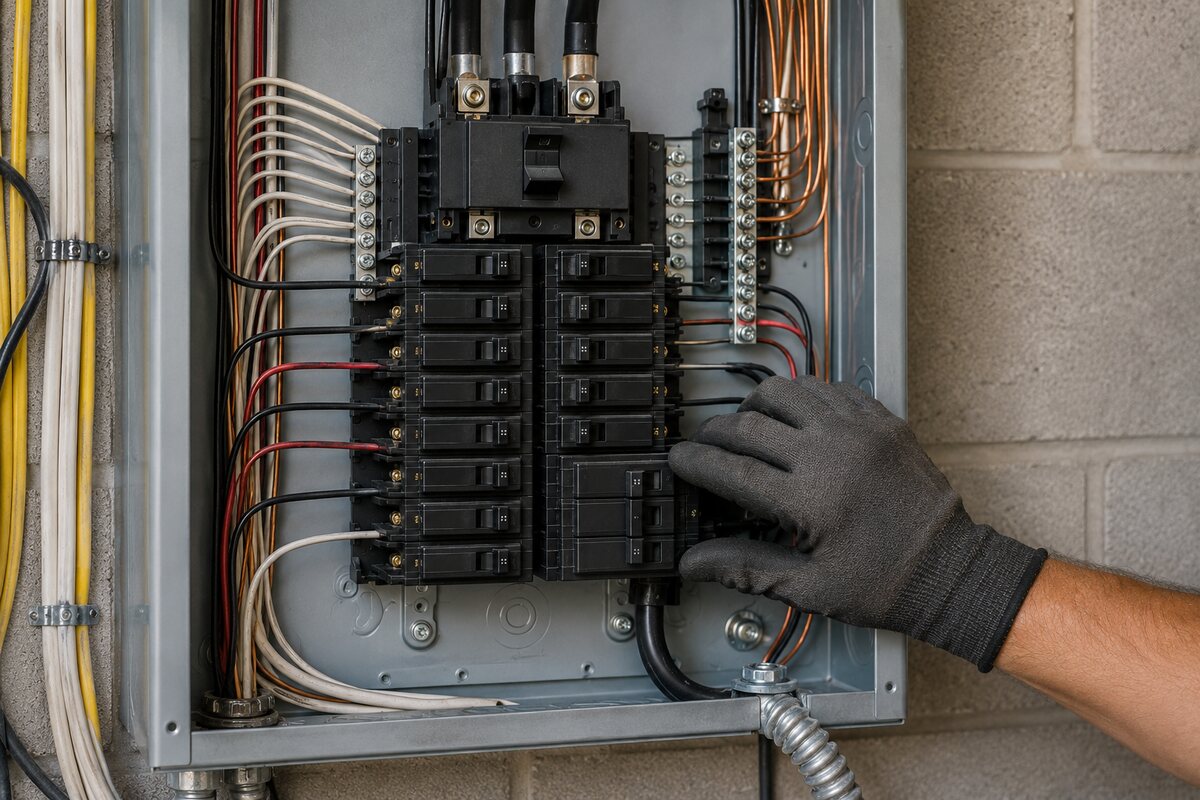
Plenty of homes do. A newer house with a 200-amp service usually has the capacity to add a charger without drama. An older home on a 100-amp panel, or a panel that’s already full of breakers with no open slots, is where it gets more involved. Sometimes the answer is a load calculation that shows there’s room after all. Sometimes it’s a smaller-amperage charger that still covers your driving. And sometimes the honest answer is that the panel or the service needs an upgrade first, which is real work with a real cost, and we’d rather tell you that before you buy a charger than after. If your home is at that point, our panel upgrade and service upgrade pages walk through what’s involved.
What does an EV charger installation cost?
The honest answer is that it depends on your home, and we’ll show you what we find.
Here’s what actually moves the number. The biggest piece is the run: how far the charger sits from your panel, and what the wire has to pass through to get there. A charger on the garage wall right behind the panel is a short, clean job. A charger at the far end of a detached garage, or one that needs a trench, is more wire and more labor. After that it’s the amperage you’re wiring for, because a 60-amp circuit uses heavier wire and a bigger breaker than a 40-amp one. Then there’s whether your panel has an open slot and the capacity to carry the load, or whether it needs a subpanel or an upgrade first. Hardwired versus plug-in makes a small difference. And the permit and inspection are part of the job, not an add-on, because this circuit gets pulled and checked like any other.
What we won’t do is keep the number a secret. We publish real prices on our pricing page, and the price we publish is the price we quote. When we come look at your home, you get a written quote before any work starts. If we open the panel and find something that changes the plan, we stop and talk it through with you before we go further. No moving the number on you at the end.
What can go wrong, and the part that starts fires
Customers ask us this, and we’d rather you hear it plainly.
The trouble with EV charging isn’t the car and it isn’t the charger. It’s the circuit underneath, because charging is a continuous load that runs for hours, and a circuit that was fine for a few minutes of a power tool can overheat when it’s asked to carry 40 amps all night. Here’s what we see go wrong:
- A regular outlet or an extension cord doing a job it can’t. People try to stretch Level 1 with a household extension cord, or run a Level 2 charger off an outlet that was never wired for a continuous load. That’s how connections heat up, melt, and start fires inside the wall where you can’t see it. A charger needs its own dedicated, properly sized circuit. Every time.
- Undersized wire behind the right-looking outlet. A NEMA 14-50 outlet on the wall looks the same whether it’s fed by the correct heavy wire or by whatever was already there. If the wire and breaker aren’t sized for the charger’s continuous draw, the outlet is a hazard even though it fits the plug. This is the most common thing we’re called out to fix after a rushed install.
- A panel that’s already maxed out. Adding a big new circuit to a panel with no headroom is how you get nuisance trips at best and an overloaded service at worst. The load calculation isn’t a formality. It’s what keeps the whole system safe.
- No permit, no inspection. An EV circuit gets permitted and inspected like any other major electrical work. Skipping it to save a few dollars can cost you at resale, and it means nobody checked the one circuit in your house that runs at full load for hours at a time.
- Wrong rating for an outdoor or damp spot. A charger on the outside of the house or in a detached garage needs the right weatherproof rating and GFCI protection. An indoor-rated setup mounted outside doesn’t last and isn’t safe.
None of this is a reason to be nervous about going electric. It’s a reason to have the circuit put in by someone who does it for a living.
How T.A.P. handles an EV charger install
We start with the panel, not the charger. Before we quote anything, we look at your service, count your open slots, and run the load calculation to see what your home can actually carry. That tells us whether you’re a straightforward install or whether there’s a capacity conversation to have first, and either way you hear it straight.
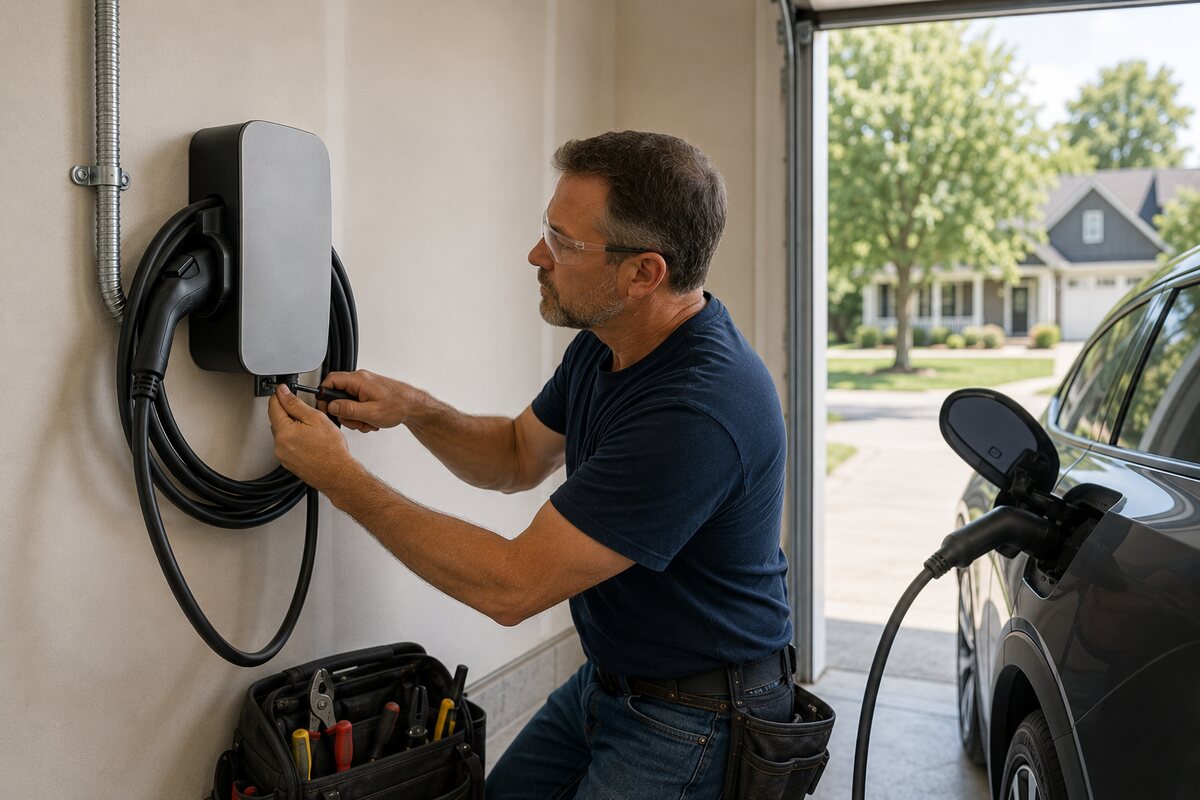
From there it’s a clean job. We run a dedicated circuit sized for your charger, mount the unit where it reaches your car and makes sense for your garage, wire it plug-in or hardwired to match your equipment, pull the permit, and meet the inspector. We’ll install a charger you already have, the one the dealer sent home with you or one you bought yourself, or we’ll help you land on the right amperage if you haven’t bought yet. When we’re done, we make sure it’s charging the way it should and show you what you’re looking at. If your home needs a panel or service upgrade to support the charger, we fold that into the plan and show you the whole picture rather than working around it.
How T.A.P. is different from a typical Southeast Iowa electrician
Plenty of outfits will screw a charger to the wall. Fewer will run the load calculation first, tell you honestly when your panel needs attention before the charger goes in, and size the circuit for the continuous load instead of whatever’s quickest. We publish our prices, we quote off what we actually find, and we don’t come back at the end asking for more on work we already scoped. We’re licensed and insured in Iowa and Illinois, we pull the permits, and we meet the inspector, because that’s what doing it right looks like. The point is simple: you plug in at night, and every morning the car’s ready, and you never once have to think about the wire behind the wall.
Frequently asked questions about EV charger installation
Can I just plug my EV into a regular outlet?
You can, but it’s slow and it has limits. A standard 120-volt outlet is Level 1 charging, which adds only about three to five miles of range an hour, so an overnight charge gets you maybe forty miles back. It also has to be a dedicated outlet in good shape, never an extension cord, because charging pulls hard for hours and a stretched or shared circuit can overheat. Most drivers move up to a Level 2 charger for that reason.
What’s the difference between Level 1 and Level 2 charging?
Level 1 uses the cord that came with the car on a regular 120-volt outlet and adds three to five miles of range per hour. Level 2 uses a 240-volt circuit, the same voltage as an electric dryer, and charges four to seven times faster, enough to fill most cars overnight. Level 2 needs its own dedicated circuit installed by an electrician, and it’s what we put in most of the time.
Will my electrical panel handle an EV charger?
Often yes, sometimes not without changes. A newer 200-amp service usually has room to add a charger. An older 100-amp panel, or one that’s already full, may need a load calculation, a smaller-amperage charger, or a panel or service upgrade first. We check your panel and run the numbers before we quote, so you know where you stand before you spend anything.
Do I need to upgrade my panel or service to install a charger?
Not always. Many homes carry a Level 2 charger on their existing service. Some don’t, especially older homes on a 100-amp panel or a panel with no open slots. When an upgrade is needed, we tell you before you buy a charger, not after, and we show you the full plan and cost rather than surprising you with it.
How much does it cost to install a home EV charger?
It depends mostly on how far the charger sits from your panel, the amperage you’re wiring for, and whether your panel has the room and slots to carry it. That’s why we quote off what we find instead of over the phone. We publish real prices on our pricing page, the price we publish is the price we quote and you get a written quote before any work starts.
Should I get a hardwired charger or a plug-in one?
Both work. A plug-in charger hangs on a NEMA 14-50 outlet and can be unplugged and moved. A hardwired charger is wired straight into the wall, which is the better choice for higher-amperage units, outdoor installs, and anyone who wants the most permanent, cleanest setup. We’ll match the install to the charger you have and where it’s going.
Can you install a charger I already bought, or one the dealer gave me?
Yes. We install the charger that came home with your car, one you bought yourself, or we’ll help you pick the right amperage if you haven’t bought yet. What matters is that the circuit behind it is sized correctly for that specific unit’s continuous draw, which is the part we handle.
How long does an EV charger installation take?
A straightforward install, with the charger near the panel and room in the service, is often a few hours. A longer wire run, a trench to a detached garage, or a panel that needs work first adds time. We give you a realistic schedule with your quote, not a guess.
Do I need a permit to install an EV charger?
Yes. A home charger runs on a dedicated high-amperage circuit that gets permitted and inspected like any other major electrical work. We pull the permit and meet the inspector as part of the job. It’s also the only way anyone verifies that the one circuit in your house running at full load for hours was done right.
How fast will a Level 2 charger fill my car?
It depends on the charger’s amperage and your car, but a typical Level 2 setup adds roughly 20 to 40 miles of range per hour, enough to take most cars from low to full overnight. Higher-amperage chargers charge faster, as long as your panel and your car can both support the higher draw, which is part of what we size for.
Can you install a charger outside or in a detached garage?
Yes. Outdoor and detached-garage installs are common. They need the right weatherproof rating and GFCI protection, and a detached building means a longer run and sometimes a trench, which we account for in the quote. We wire it to hold up where it’s actually mounted, not just indoors.
Will an EV charger raise my electric bill, and do I need a second meter?
Charging at home does add to your electric use, the same way any big appliance does, but it’s almost always cheaper than gas for the same miles. You don’t need a second meter for a standard home charger. If you’re curious about off-peak rates, your utility can tell you whether they offer them, and we can set you up to take advantage of a timer if your charger supports one.