
“How much does it cost to rewire my house, and do you have to tear the walls apart to do it?”
That’s the question we hear most, and we answer both halves below without the runaround. Short version: a whole-home rewire is usually less of a headache than most people picture, we can fish new wire through most finished walls without gutting them, and you’ll know what we found and what it costs before we start pulling wire.
If your home still runs on knob-and-tube, screw-in fuses, or wiring that three different people patched over the years, you’re in the right place. T.A.P. Electric has rewired historic homes, postwar homes, and farmhouses across Southeast Iowa and West Central Illinois. Licensed in both states. The owner, Troy, is on the job.
Wondering what is actually behind your walls before you decide? Our guide on how to tell what kind of wiring is in your home helps you read it yourself.
What a whole-home rewire actually is
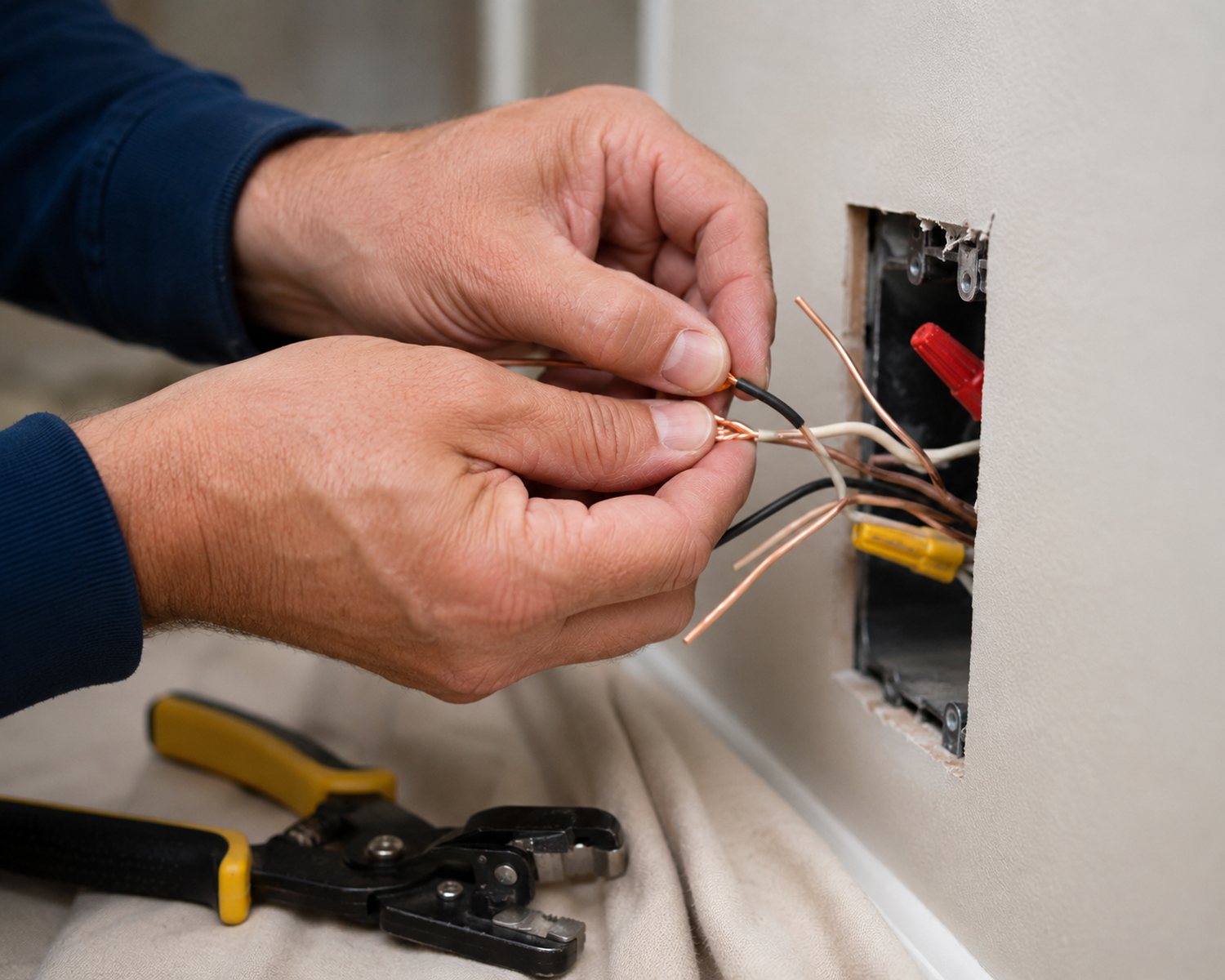
We’ve all stood in a basement, looked up at the wiring, and just shook our head. That tangle is usually the result of years of people adding a circuit here, pulling one out there, or a handyman who figured he knew enough to cobble it together. A whole-home rewire is how you stop patching and start over with wiring that’s safe, code-compliant, and built for how you actually use power today.
Here’s what the work usually covers:
- Pulling the old wiring out: knob-and-tube, cloth-wrapped wire, brittle insulation, the stuff that should have left decades ago.
- Running new wire through walls, attics, crawl spaces, and tight runs. We can cut in receptacles and lights in most walls, plaster and two-story homes included.
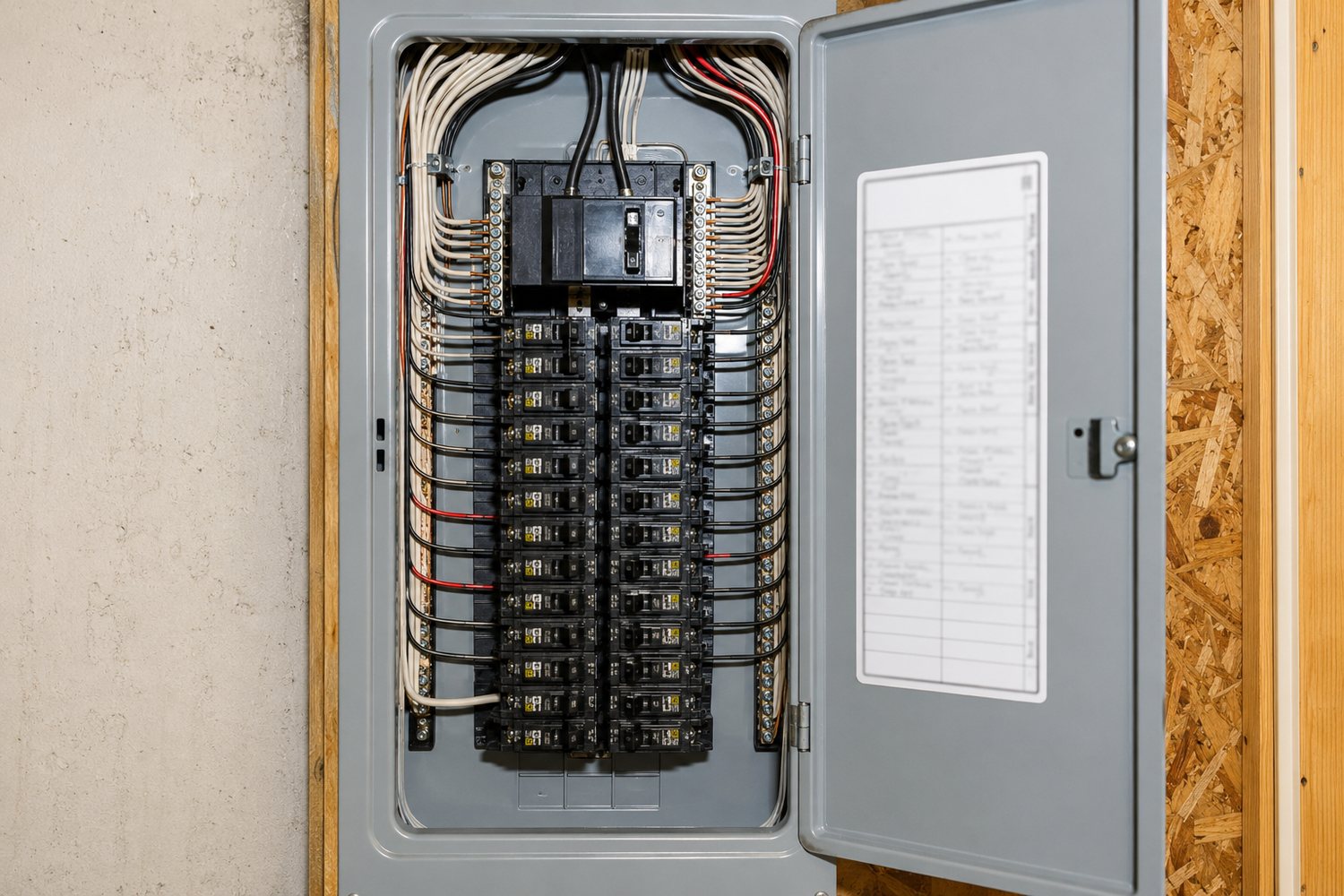
- Getting rid of the old fuse panel and bringing in a properly sized breaker panel and service.
- Adding the protection today’s code calls for: grounded outlets, GFCI where water’s nearby, AFCI protection on the circuits that need it.
Big job or small, residential or commercial, we’ll talk through what you’re after and where it makes sense to start.
Why your home may need it
This is the part a lot of electricians skip. We’d rather you know what’s actually at stake, because the risks here are real and worth naming plainly.
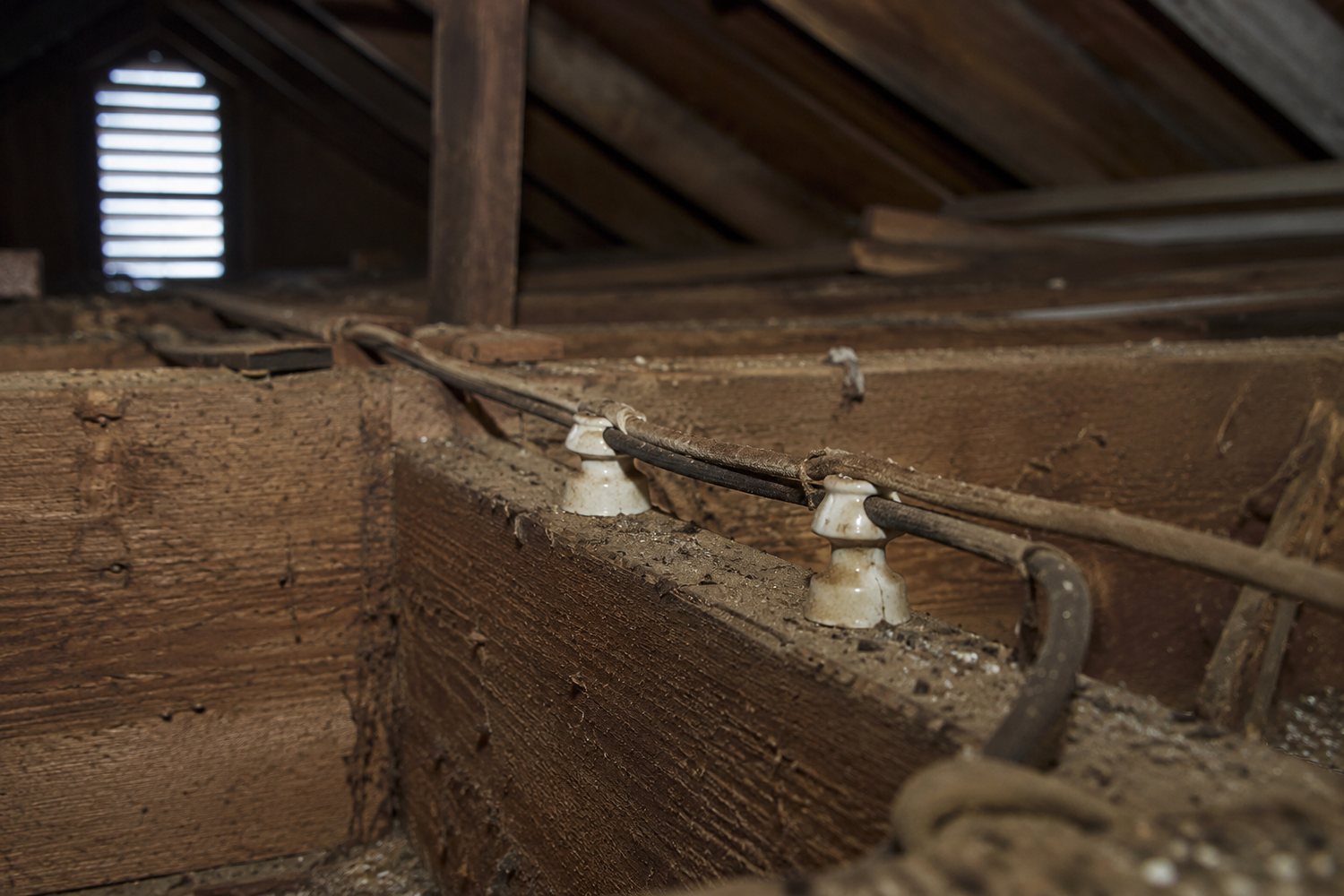
Knob-and-tube wiring. Common in homes built before the 1950s. It wasn’t bad work for its day, but it has no ground, the insulation gets brittle with age, and it doesn’t play well with the modern practice of burying it under attic insulation. Insurance companies have gotten strict about it, and some won’t write a policy on a home that still has it.
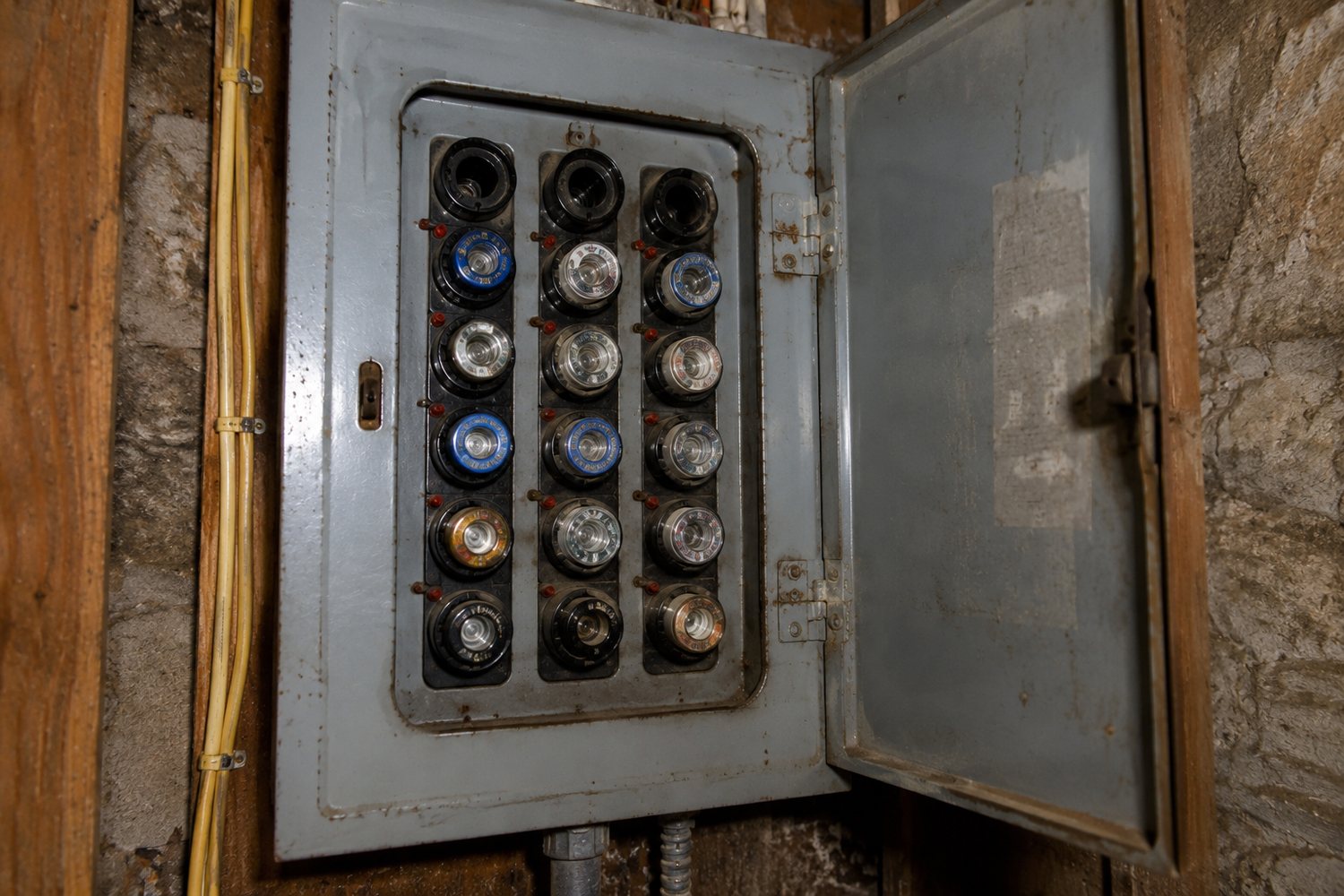
Old fuse panels. Fuses themselves aren’t the danger. The danger is what people do with them. When a circuit keeps blowing, somebody screws in a bigger fuse instead of fixing the problem, and now the wire is carrying more current than it was built for. That’s how fires start inside walls.
Patchwork wiring. Outlets wired all over the place, circuits nobody can label, pull-chain lights, back-stabbed connections working loose behind the drywall. Each piece might pass on its own. Together they add up to a system nobody fully understands, including the people who’ll have to work on it next.
Ungrounded two-prong outlets. Fine for a lamp. Not fine for anything with a metal case, a computer, or a kitchen full of appliances.
If your home has any of this, a rewire isn’t an upgrade for looks. It’s the difference between wiring you have to worry about and wiring you can forget about.
What does a whole-home rewire cost?
We don’t duck this question, and we don’t hide a number behind a form.
Here’s the honest answer: the cost of a whole-home rewire depends on what we find when we look. Square footage, how many circuits the home needs, how the walls are built, how much knob-and-tube is buried in the attic, whether the panel and service need upgrading too. All of it moves the number. A small bungalow and a two-story farmhouse are not the same job, and it wouldn’t be fair to either homeowner to pretend they are.
What we will do is talk real numbers with you up front. Troy can give you a ballpark over the phone once he understands the home, and a firm quote after he’s walked it. The price he quotes is the price you pay. If we open a wall and find something nobody could have seen, like old asbestos wrap or a hidden junction behind the plaster, we stop, show you what we found, and talk it through before we go further. No surprise line items at the end.
We publish our pricing on our pricing page so you can see how we think about cost before you ever call.
How T.A.P. Electric is different
Most homeowners calling about a rewire have already called someone else first. So here’s an honest, category-level picture of what to look for, and where we land.
We show up and call back. The most common thing we hear in the field is some version of “you’re the first one who actually called me back.” A lot of shops in this part of Iowa are slammed, and a big job like a rewire can sit two weeks out for an estimate and two months out to start. We work to be the ones who answer.
We’ll show you the price before the work. Plenty of electricians won’t put a number in front of you until they’re standing in your living room. We publish pricing and quote it straight.
The owner is on the job. When you hire T.A.P., Troy is the one walking your home, pulling the permits, and standing behind the work. He’s a licensed master electrician in Iowa and Illinois, and the work is done to current code, inspected, and done right the first time.
We clean up after ourselves. Sounds small. Customers mention it in writing more than almost anything else, because so few trades do it.
We’re not going to tell you we’re the only good electrician in Southeast Iowa. We’ll tell you to ask around, read the reviews, and call the shop that returns the call.
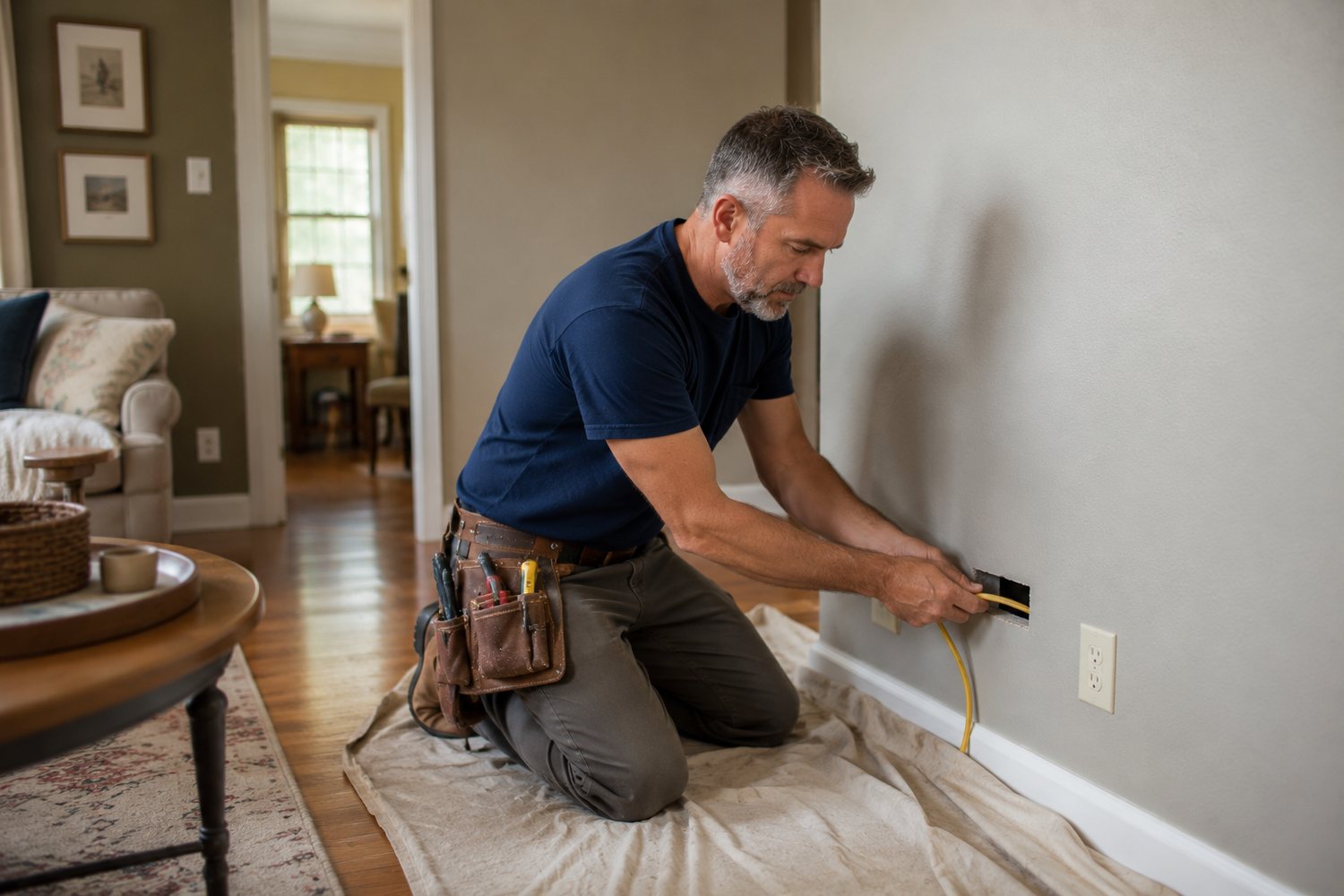
What a customer says
“Troy was an immense help getting the very outdated electrical work in our home up to current code, putting in the necessary equipment to upgrade our appliances, and having our home ready to move into in a timely manner. His entire process was very thorough, from his walk-through and quote with all the work suggested, to the finished product and final walk-through. He even cleaned up some cobwebs that had accumulated in our basement rafters and didn’t leave any mess behind. Another thing we really appreciated was the progress photos he’d share as work was completed each week. Overall, my wife and I are very pleased and would absolutely recommend him to anyone needing electrical work.”
Parker M., homeowner — 5-star Google review (whole-home rewire to code)
Proof from the field
We document our work as we go. On a recent whole-home rewire and remodel in Burlington, the crew shot over a hundred progress photos from the first wall opened to the final walk-through, so the homeowner could see exactly what was happening behind the plaster each week.
That’s not unusual for us. It’s how we keep a big job from feeling like a mystery, and it’s why customers keep mentioning the weekly photos in their reviews.
Serving Southeast Iowa and West Central Illinois
T.A.P. Electric rewires homes across Southeast Iowa and West Central Illinois: Burlington, West Burlington, Fort Madison, Mount Pleasant, Keokuk, and the surrounding communities. Licensed and insured in both Iowa and Illinois.
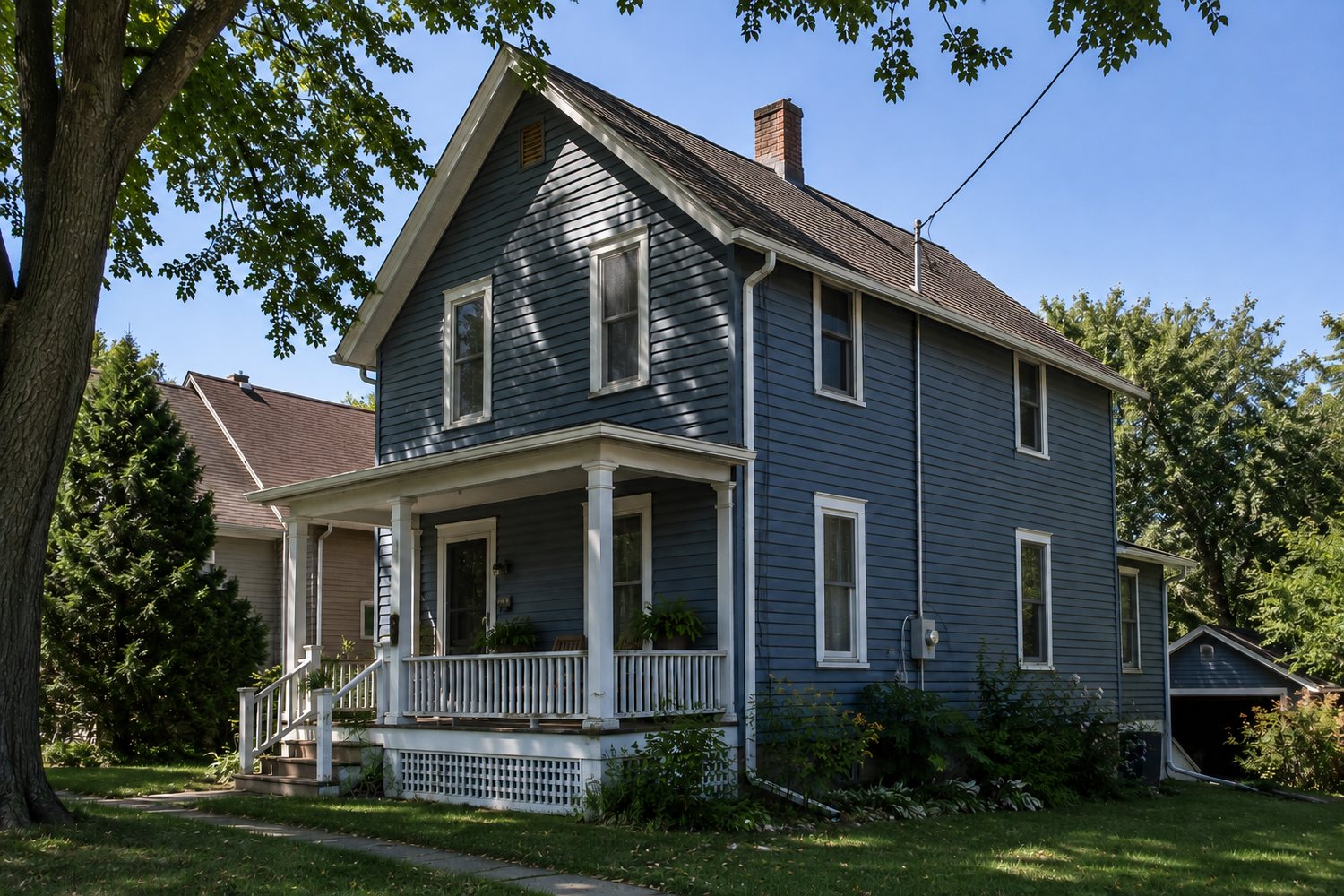
If you’ve been putting off a rewire because you didn’t know what it would cost or didn’t want your house torn apart, let’s talk it through. Troy will tell you what your home needs, what it doesn’t, and what it’ll run, all before any work starts.
Frequently asked questions
How much does it cost to rewire a whole house?
It depends on the home: square footage, the number of circuits, how the walls are built, and whether the panel and service need upgrading too. We won’t pretend a one-size number is honest. Troy can give you a ballpark over the phone and a firm quote after walking the home, and the price he quotes is the price you pay. You can also see how we think about cost on our pricing page.
Do you have to tear out my walls to rewire?
Usually not. We can fish new wire through most finished walls and cut in receptacles and lights with minimal patching, including plaster walls and two-story homes. Where we do have to open something up, we tell you before we do it.
Is knob-and-tube wiring safe?
It was acceptable work when it was installed, but it has no ground, the insulation turns brittle with age, and it’s a problem when it’s buried under attic insulation. Many insurance companies now limit or refuse coverage on homes that still have it. If your home has knob-and-tube, it’s worth a conversation.
How old is knob-and-tube wiring?
It was the standard in homes built roughly from the 1900s into the 1940s and 50s. If your house is from that era and hasn’t been rewired, there’s a good chance some is still in the walls.
How long do old fuse panels last, and should I replace mine?
A fuse panel can run for decades, so age alone isn’t the issue. The risk is when someone replaces a blown fuse with a larger one to stop the nuisance, which lets the wiring carry more current than it was built for. If your home still runs on fuses, upgrading to a properly sized breaker panel is one of the better safety investments you can make.
Can we keep living in the house during a rewire?
In most cases, yes. We sequence the work so you keep power where you need it and stage the job room by room. Troy will walk you through the plan for your specific home so there are no surprises.
How long does a whole-home rewire take?
It varies with the size of the home and how much is being replaced. Troy gives you a timeline with your quote and keeps you posted as the work moves. Many of our rewire customers get weekly progress photos so they can see where things stand.
Do I need a permit to rewire my house, and do you handle it?
Yes, a rewire needs a permit and inspection, and we take care of it. Troy pulls the permits, coordinates the inspection, and handles the utility line work so you don’t have to chase any of it.
Do I have to use a licensed electrician?
For work this size, you want one. T.A.P. Electric is licensed and insured in both Iowa and Illinois, and the work is inspected and done to current code. A rewire touches every room in your home, so it’s not the place to find out a job was done wrong.