
If you’ve ever stood in your backyard wondering whether the power should come into your house through the air or out of the ground, you’re asking a question we hear all the time. Folks call us and say it different ways. “Where’s my meter supposed to go?” “How deep do you have to bury the line?” “My neighbor’s wires run underground and mine don’t, is something wrong with mine?”
Nothing’s wrong with either one. Overhead and underground are just two ways to get electricity from the utility to your home, and both are safe and code-compliant when they’re done right. Which one makes sense for your place depends on what’s already there, what the utility allows, and what you’re trying to fix or build.
Here’s the plain-English version of the difference, what each one costs to work on, where each one runs into trouble, and how we handle it from the first phone call to the final inspection.
What’s the difference?
Overhead service is the setup most older homes in Southeast Iowa have. The utility runs a line through the air from the pole to your house. It connects to a pipe coming up off your roof or wall called a mast, with a weatherhead on top to keep rain out. From there the wires drop down to your meter and into your panel. If you can look up and see wires running from a pole to your house, you’ve got overhead service.
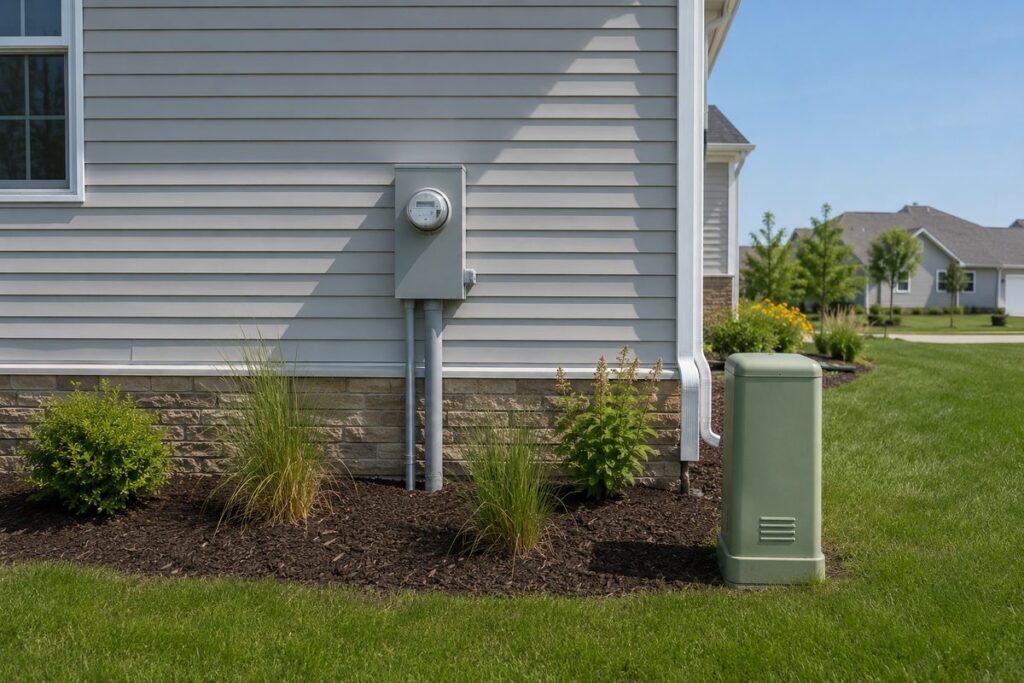
Underground service runs the same power, just buried. Instead of coming through the air, the line runs underground from a transformer or pedestal to your meter. There are no wires overhead to look at. You’ll see this on a lot of newer construction and in neighborhoods where the utilities were put in underground from the start.
Both deliver the same electricity. The difference is the path it takes to get to you.
Which one does your home need?
Most of the time the answer is “the one you already have.” If your home has overhead service and it’s working and up to code, there’s usually no reason to switch. The same goes for underground.
The question gets more interesting when something changes. A few of the common reasons people call us about this:
- A storm took out the overhead line. Wind, ice, or a falling limb pulls the mast off the house. Now’s a natural moment to ask whether to put it back overhead or go underground.
- You’re building new or adding a garage or shop. New construction is the easiest time to choose, because nothing’s installed yet.
- You’re upgrading the service anyway. If you’re going from a 100-amp to a 200-amp service, the meter and entrance are getting reworked regardless, so the overhead-vs-underground question naturally comes up.
- You just want the wires gone. Some folks don’t like the look of overhead lines, or they’re worried about limbs and storms. Going underground is an option worth pricing out.
If you’re not sure what you have or what you need, that’s fine. That’s the kind of thing we figure out when we come look.
What does it cost?
The honest answer is that it depends on what we find, and we’ll show you what we find. Service-entrance work isn’t a one-size number, because the price moves with the size of the service, the condition of what’s already there, how far the underground run is, what the ground is like to dig through, and what the utility and inspector require for your specific setup.
What we won’t do is keep the number a secret. We publish real starting prices right on our pricing page, and the price we publish is the price we quote. When we come out and look at your service, you’ll get a written quote before any work starts. No surprises once we open things up. If we run into something unexpected, we stop and talk it through with you first.
Switching from overhead to underground usually costs more than putting overhead back, because of the trenching and the buried conduit. But it’s a permanent fix to the storm-damage worry, and for some folks that trade is worth it. We’ll lay both options out so you can decide.
What can go wrong with each one
Customers ask us this a lot, and we’d rather you hear it straight.
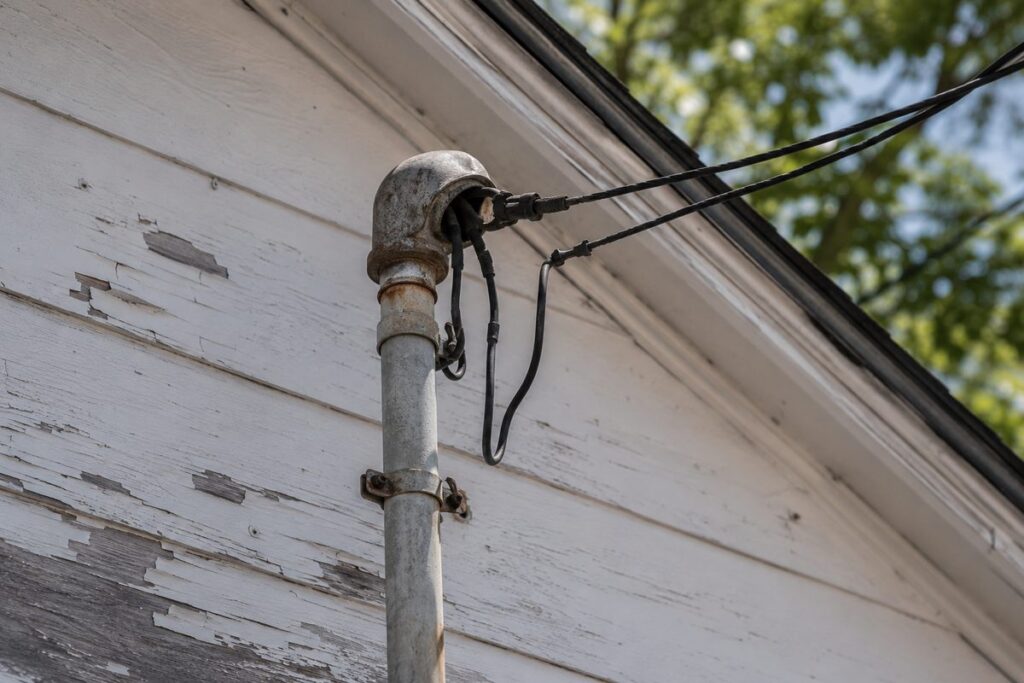
Overhead service is exposed to the weather. The most common call we get is storm damage. A limb comes down, catches the line, and pulls the mast right off the house. That can break the meter and leave you without power until it’s repaired. Older masts also rust and loosen over time, and an old weatherhead can let water in. None of this is a reason to panic. It’s just the nature of having equipment up in the air, and it’s all repairable.
Underground service is protected from the weather, but it’s not maintenance-free. Buried lines can be damaged by digging, by shifting ground, or by water getting into an old, failing run. The catch with underground is that when something does go wrong, it’s harder to see and can take more work to find and fix. Done to current code with the right conduit and depth, a buried service should last a long time without trouble.
The bigger problem we run into isn’t overhead or underground. It’s old. A lot of homes in this area have service entrances that were fine when they went in but aren’t to today’s code, especially around grounding, surge protection, and intersystem bonding. When we touch a service, we bring the whole thing up to code, not just the part that broke.
How T.A.P. Electric is different from a typical Southeast Iowa electrician
Service-entrance work means dealing with a lot of moving parts. There’s the National Electric Code, the utility company’s rules, the inspector’s expectations, and the city’s requirements, and they don’t always line up neatly. A lot of electricians around here will leave you to chase the utility and the permit and the inspection yourself.
We don’t hand that off to you. When you hire us for a new service or an upgrade, we handle the communication, the paperwork, the permit, the utility coordination, and the inspection scheduling. We’ll tell you who the utility is and what their rules are, who the inspector is and what they’ll be looking for, what size service you actually need, and what grounding and surge protection the code calls for. You get one point of contact and one straight answer, not a runaround.
That, and the price up front, is the difference.
What our neighbors say
We’ve done both sides of this work for folks all over the area. Here’s two of them, in their own words.
On the underground side, Jessica told us about the run we did out to her garage:
“TAP electric did great. They ran the electric underground out to our garage. Our setup was older and needed brought up to code. They were friendly, kind, easy to get ahold of, were on time, did clean work, and most importantly were fairly priced for quality work. As a female customer I found them easy to communicate with and I felt respected.”
— Jessica O., Google review
On the overhead side, Jim called us after a storm:
“A limb came down and pulled our mast down and broke the meter. Troy worked into the night and got us up and running, and he didn’t scalp us on the labor. I highly recommend him.”
— Jim A., Google review
Two different setups, same result. The work gets done right and the customer gets treated like a neighbor.
Ready to figure out what your home needs?
Whether you’ve got a storm-damaged mast that needs fixing tonight, a new build that needs a service installed, or you’re just trying to understand what you have, we’ll come look and give you a straight answer and a real number. Reach out and let’s talk it through.
Frequently Asked Questions
What’s the difference between overhead and underground electrical service?
Overhead service runs the utility’s power line through the air from a pole to a mast on your house. Underground service runs that same power buried from a transformer or pedestal to your meter. Both deliver the same electricity and both are safe and code-compliant when installed correctly. The only difference is the path the line takes to reach your home.
Which is better, overhead or underground?
Neither is automatically better. Overhead costs less to install and repair and is easier to access. Underground is protected from storms and looks cleaner with no wires overhead, but costs more up front and is harder to dig up if it ever needs work. The right choice depends on your home, your budget, and what the utility allows. We’ll lay out both options so you can decide.
Can I switch my overhead service to underground?
In a lot of cases, yes. It usually involves trenching from the transformer or pedestal to your home, running buried conduit, and reworking the meter and entrance. It costs more than putting overhead back, but it’s a permanent fix to the storm-damage worry. We’ll price it out and walk you through what it takes for your specific property.
How deep does underground electrical service need to be buried?
Burial depth is set by code and depends on the type of conduit and the voltage, so it isn’t a single number for every job. The point of the rule is to protect the line from digging and damage. When we install underground service, we bury it to the depth the code and your inspector require, so it passes inspection and stays protected.
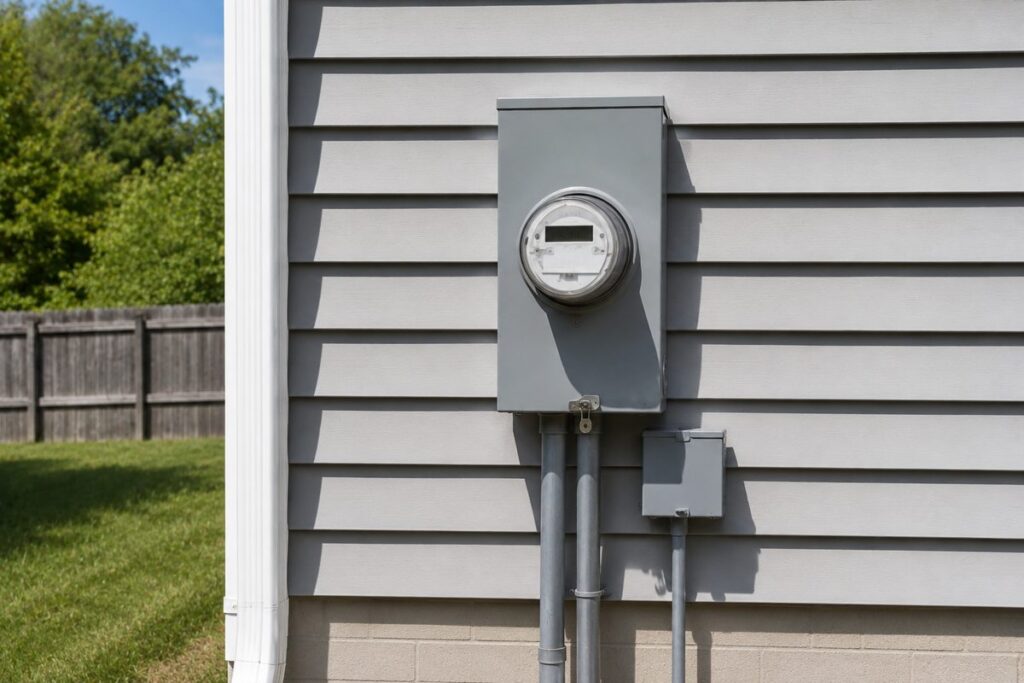
Where should my electric meter be located?
The meter location has to work for both you and the utility, since they need access to read and service it. Utilities have their own rules about placement, and we coordinate that with them as part of the job. If you’re upgrading or installing a service, we’ll confirm the right spot before we set anything.
How much does it cost to upgrade or install an electrical service?
It depends on the size of the service, the condition of what’s already there, the length of any underground run, and what the utility and inspector require. We publish real starting prices on our pricing page, and the price we publish is the price we quote. You’ll get a written quote before any work starts.
Do I need a permit to change my electrical service?
Yes, service work requires a permit and an inspection. The good news is you don’t have to deal with any of that. We pull the permit, handle the paperwork, coordinate with the utility, and schedule the inspection as part of the job.
My mast got pulled down in a storm. What do I do?
Call us. A storm pulling the mast off the house is one of the more common calls we get, and it often knocks out the meter and your power along with it. We can come out, repair or replace the mast and meter, bring the entrance up to current code, and coordinate with the utility to get your power restored. We’ve worked into the night before to get a family back up and running.
Will I lose power while the work is being done?
For most service-entrance work, the power has to come down for part of the job, since we’re working on the line that feeds your whole house. We plan the outage with you and the utility ahead of time so you know what to expect and we keep it as short as we can.
Is 200-amp service big enough for my home?
For most homes in this area, 200-amp service is plenty, and it’s what we install most often on upgrades. Larger homes or homes with heavy loads like an EV charger, shop equipment, or electric heat may want to size up. If you’re already reworking your service, it’s the right time to make sure the size fits how you actually use power. Take a look at our panel upgrade page for more on sizing.