
If you own an older home in Southeast Iowa, somebody may have already said the words “knob-and-tube” to you. Maybe a home inspector flagged it. Maybe your insurance company asked. Maybe you were up in the attic and saw white ceramic knobs with wire strung between them and wondered what you were looking at.
This page is here to give you the straight story, not a sales pitch. Knob-and-tube wiring isn’t something to panic about the day you find it, but it is the oldest wiring system still in a lot of homes, and it’s worth understanding what you have and what your options are. The honest version is that knob-and-tube can be safe when it’s been left alone and is in good shape, and it can be a real problem when it’s been buried, modified, or worn down over the decades. Most of the homes we see fall somewhere in between.
What knob-and-tube actually is
Knob-and-tube was the standard way homes were wired from the 1880s up through about the 1940s. You can recognize it by the parts it’s named for: ceramic knobs that hold the wires away from the wood framing, and ceramic tubes that protect the wire where it passes through a joist or stud. The wires run separately, spaced apart in open air, instead of bundled together in a cable the way modern wiring is.
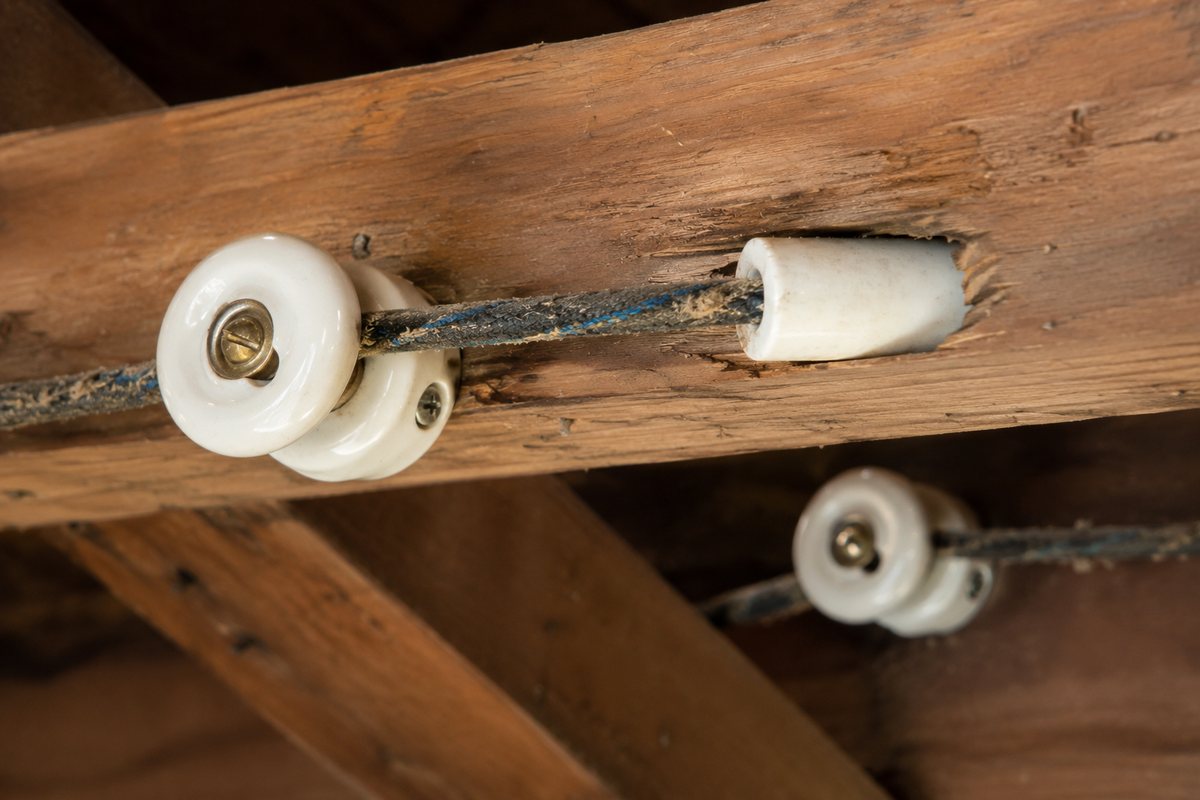
For its day, it was a sound system, and plenty of it has held up. The catch is that it was designed for a different era, with far fewer appliances, different insulation in the walls, and no expectation that anyone would be plugging in a microwave, a window AC unit, and a space heater on the same circuit.
The two things that make knob-and-tube different from modern wiring
There are two differences that matter, and they explain most of what you’ll read about it.
First, knob-and-tube has no ground wire. Modern wiring includes a third conductor that gives electricity a safe path to follow if something faults. Knob-and-tube was installed before that was standard, so the protection you’d expect at a three-prong outlet often isn’t really there, even if someone swapped in three-prong outlets along the way.
Second, knob-and-tube was designed to shed its heat into open air. The wires were kept spaced apart and away from framing on purpose. The problem shows up when someone later blows insulation into the attic or walls and buries the wiring in it. Now the heat has nowhere to go, and that’s the situation that gets attention from electricians and insurance companies alike.
How to tell if your home has it
A few signs point to knob-and-tube, though the only way to know for sure is to have it looked at:
- Your home was built before roughly 1950 and hasn’t been fully rewired
- White ceramic knobs and tubes visible in the attic, basement, or crawl space, with single wires running between them
- Two-prong outlets throughout the house
- A fuse box instead of a breaker panel
- Cloth-covered wiring rather than modern plastic-jacketed cable
If you see ceramic knobs with wire strung between them buried under attic insulation, that’s the combination worth having checked sooner rather than later.
Why knob-and-tube gets attention now
Here’s the honest version, without the fear. The wire itself, sitting in open air the way it was installed, isn’t the villain. The trouble comes from age and from what’s been done to it over a hundred-plus years.
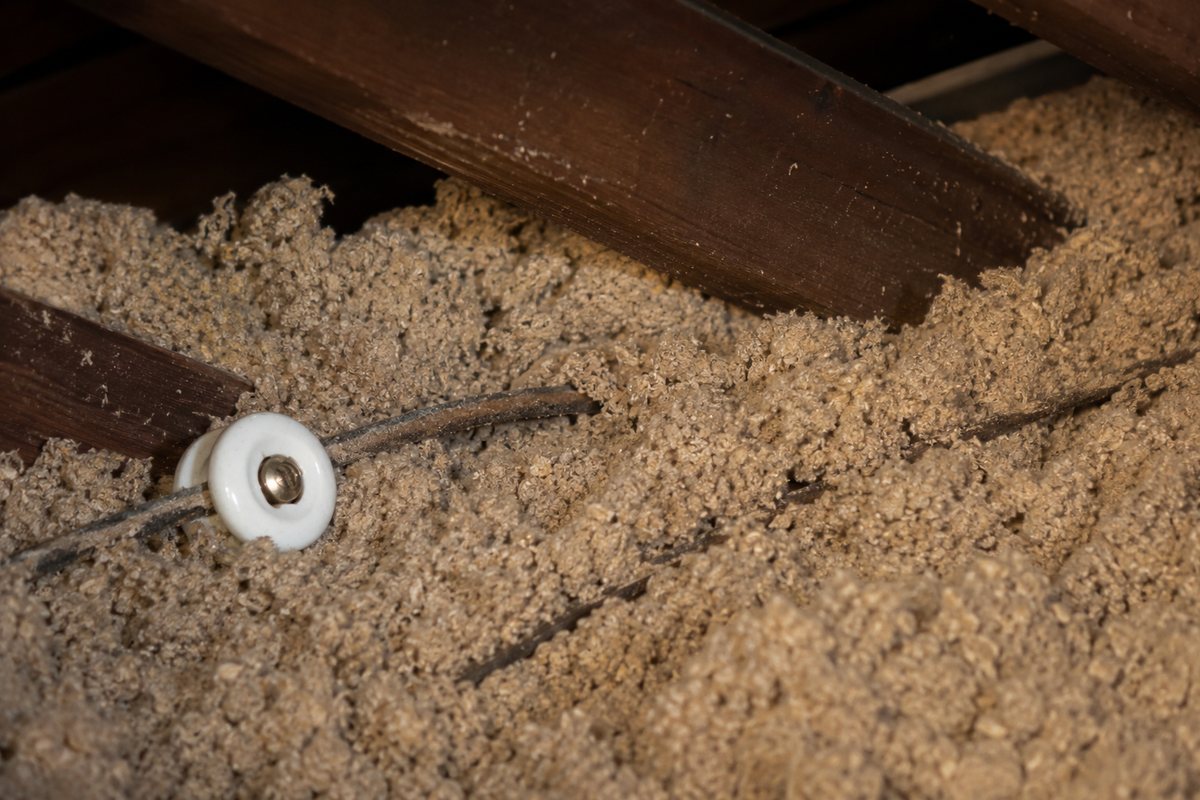
The insulation around the old wire gets brittle with time and can crack or flake where it’s handled. Decades of additions and repairs often mean somebody has spliced modern wiring into the old runs, and not always the right way. And as we covered, once knob-and-tube is buried under blown-in insulation, it can run hotter than it was ever meant to. Stack those up, and you can see why a system that was fine in 1925 deserves a real look in 2026.
None of that means your house is unsafe tonight. It means it’s worth knowing the real condition instead of guessing.
What it means for your insurance
This is the reason a lot of folks call us, so it’s worth being straight about. Some insurance companies won’t write a new policy on a home with active knob-and-tube wiring, and some will only do it with a surcharge or with proof that it’s been replaced or properly evaluated. If you’re buying or selling a home, or your carrier has started asking questions, you’re not imagining it. If that’s what’s driving your call, tell us, and we can talk about what your insurer is likely to want to see documented.
What can go wrong if it’s ignored
Most knob-and-tube homes don’t have a dramatic event. The risk is the quiet kind: a brittle spot in the insulation, an overloaded old circuit, or a buried run that’s been running warm for years behind a wall you never open. The reason to deal with it isn’t panic. It’s that this is a known, fixable situation, and it’s a lot easier to handle on your schedule than to discover the hard way.
How knob-and-tube gets addressed
There are a couple of honest paths, and the right one depends on the home.
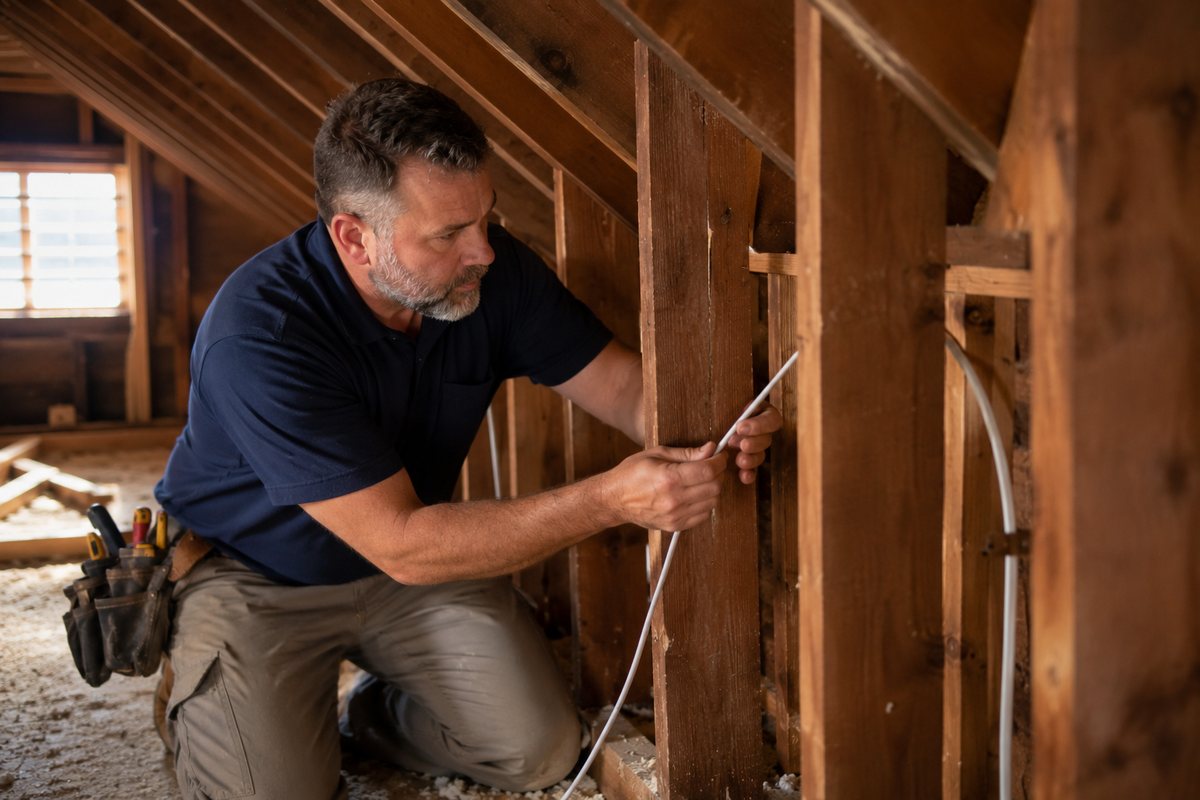
In some homes, where only a section of knob-and-tube is left and the rest has already been updated, the answer is replacing what’s still there and cleaning up the connections so everything is on modern, grounded wiring. In many older homes, though, the knob-and-tube is tied in with old fuses and an undersized service, and the sensible long-term answer is a whole-home rewire that brings the house up to modern, grounded wiring and gives you a panel that can handle how you actually live. You can read more about that on our whole-home rewire page, and if your service or panel is part of the picture, our panel upgrade page covers that side.
We can get to the wiring in places that scare a lot of people off. We climb into attics, through crawl spaces, and into tight areas, and we can cut in receptacles and lights in most walls, including plaster and two-story homes. Getting the old knob-and-tube out of a house is a good part of what we do.
The way we look at it is simple. We look first, we tell you what we actually found, and we explain which option fits your home and why before any work starts. If replacing a section is the right call, that’s what we’ll say. If a full rewire is genuinely the better long-term answer, we’ll explain why, and we won’t talk you into more house than you need.
What it costs
The honest answer is that it depends on what we find, and we’ll show you what we find before we start. The number comes down to how much knob-and-tube is left, how your home is built, how easy the wiring is to reach, and whether the right fix is replacing a section or rewiring the home. What stays the same is how we handle the price. The number we show you is the number we quote, and you can see how we price our work on our pricing page.
Want someone to take a look?
If your home is from the knob-and-tube era, or an inspector or insurer has flagged it, the smart move is to have it looked at so you know the real condition instead of guessing. We’ll come out, see what you’ve actually got, and tell you honestly where you stand.
Not sure whether your home actually has knob-and-tube? Our guide on how to tell what kind of wiring is in your home walks you through spotting it yourself.
Frequently Asked Questions
Is knob-and-tube wiring safe?
It can be, when it’s in good condition and has been left the way it was installed, in open air. It becomes a concern when the insulation has gotten brittle, when it’s been spliced into badly over the years, or when it’s been buried under attic insulation where it can’t shed heat. The right move is to have it looked at so you know which situation you’re in, rather than assuming the best or the worst.
How old is knob-and-tube wiring?
It was the standard wiring method from the 1880s into about the 1940s. If your home was built before roughly 1950 and hasn’t been fully rewired, there’s a real chance some knob-and-tube is still in it, often up in the attic or down in the basement where nobody’s had a reason to look.
How do I know if my home has knob-and-tube?
The clearest sign is seeing it: white ceramic knobs holding single wires, with ceramic tubes where the wire passes through framing, usually visible in an attic, basement, or crawl space. Two-prong outlets throughout the house, a fuse box instead of breakers, and cloth-covered wiring are all clues too. The only way to know for certain is to have it checked.
Does knob-and-tube need to be removed?
Not always, but often it’s the right long-term call. If only a small section is left, replacing that section may be enough. In a lot of older homes, the knob-and-tube comes bundled with old fuses and an undersized service, and a whole-home rewire is the answer that actually solves the problem instead of patching it. We’ll tell you honestly which one your home needs.
Will knob-and-tube affect my home insurance?
It can. Some insurers won’t write a new policy on a home with active knob-and-tube, and others will only do it with a surcharge or proof that it’s been replaced or evaluated. If insurance is what’s driving your question, let us know and we can talk about what your carrier is likely to want documented.
Can I just put insulation in my attic over knob-and-tube?
This is the one to be careful with. Knob-and-tube was designed to shed its heat into open air, and burying it under blown-in or batt insulation traps that heat. That’s exactly the situation that turns old-but-stable wiring into a real concern. If you’re planning to add attic insulation in an older home, it’s worth having the wiring evaluated first.
Is it safe to buy a house with knob-and-tube wiring?
It can be a fine home to buy as long as you go in with your eyes open. The right step is having the wiring evaluated so you know how much is left, what condition it’s in, and what it would take to update it. That turns an unknown into a number you can factor into your offer and your insurance conversation.
Do you have to tear up the walls to replace knob-and-tube?
Some of it, sometimes, but less than people fear. We can reach a lot of wiring through attics, crawl spaces, and tight areas, and we can cut in receptacles and lights in most walls, including plaster and two-story homes. How much opening up a job takes depends on the house, and we’ll walk you through it before we start.
Who do I call to replace knob-and-tube in Southeast Iowa?
T.A.P. Electric handles knob-and-tube and older-home wiring across Burlington, West Burlington, Keokuk, Fort Madison, and the surrounding area. We’ll see what you’ve actually got, tell you honestly what we found, and give you a real price before any work starts. Give us a call or reach out through our contact page.