
The calls come in a cluster every time. Ice storm rolls through in January, or a summer line of wind knocks the power out for two days, and the phone starts ringing. “How much for a generator that just comes on by itself?” “My neighbor’s whole house stayed lit and mine went dark, what does he have?” “I’ve got a well and a sump pump, what happens to those when the power’s out?”
Those are fair questions, and around here they’re not hypothetical. Southeast Iowa loses power to storms often enough that a backup plan is worth thinking about before the next one, not during it. This page lays out the plain-English version: the kinds of generators, which one fits your home, what the work costs, what can go wrong, and how we handle an install from the first phone call to the final inspection.
What a generator actually does (and the two kinds you’re choosing between)
A generator makes its own electricity when the utility can’t. That’s the whole job. What separates one setup from another is how much it powers, how it turns on, and what it runs on.
For a house, you’re really choosing between two paths.
A portable generator is the one you wheel out of the garage, fill with gasoline, and start by hand. It’s the cheaper way in, and for some folks it’s enough. The catch is that it only powers what you can reach with a cord unless it’s wired to the house properly, it needs refueling every several hours, and it has to be run outside, well away from the house, because the exhaust is dangerous. If you want a portable generator to safely power things that are hard-wired, like a furnace or a well pump, you need a transfer switch or an interlock installed. More on that below, because this is the part people get wrong and it’s the part that can hurt someone.
A standby generator is the permanently installed unit that sits outside on a pad, like an air conditioner. It runs on natural gas or propane, so there’s no refueling. When the power drops, it starts on its own within seconds, powers the circuits it’s sized for, and shuts itself down when the utility comes back. You don’t have to be home. You don’t have to do anything. That convenience is what most people are picturing when they say “the kind that comes on by itself,” and it’s the bigger share of what we install.
Both are real options. The right one depends on your budget, how much you need to keep running, and how hands-on you want to be when the lights go out.
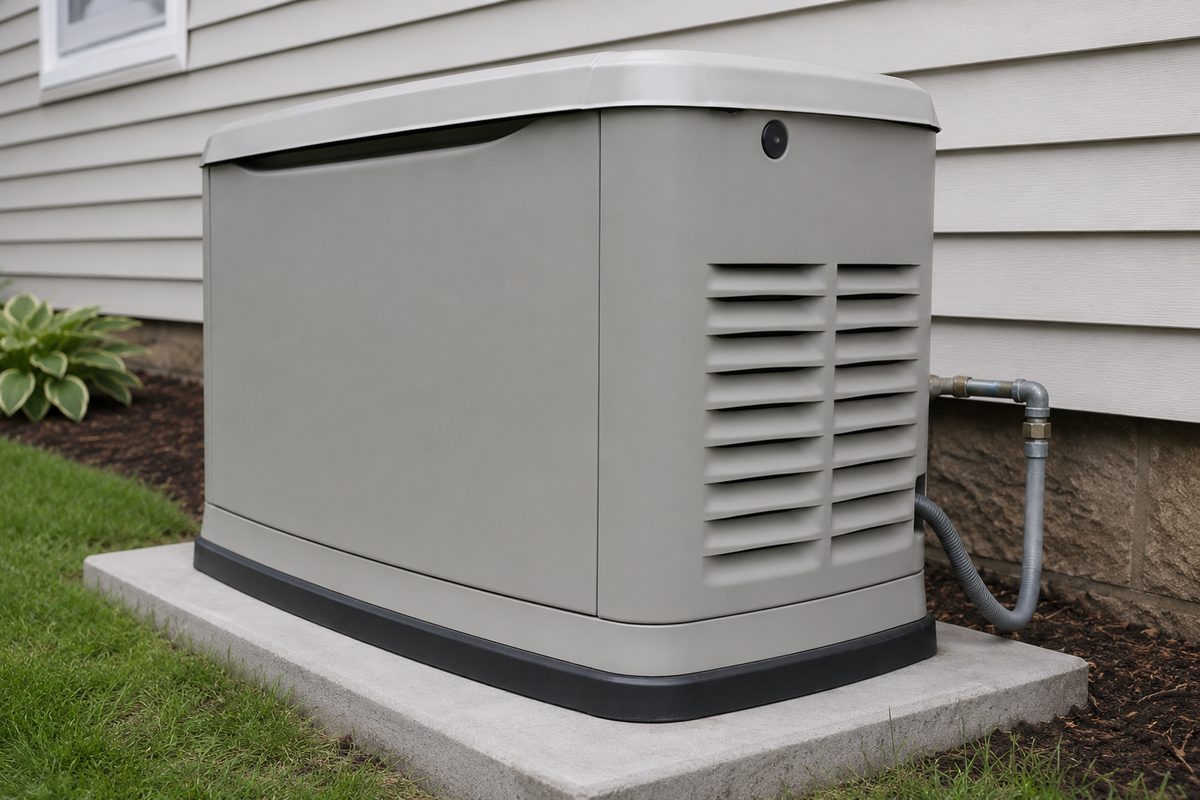
Which generator does your home need?
The honest starting question isn’t “how big,” it’s “what do you actually need to keep on?”
Some folks want the whole house to run like nothing happened, air conditioning and all. Others just need the essentials covered: the furnace, the fridge, a well pump, a sump pump, and a few lights and outlets. That difference drives everything, because it sets the size of the generator and the size of the electrical work behind it.
A few things that push the decision one way or the other:
- You’re on a well and septic with a sump pump. When the power’s out, so is your water and your basement’s defense against flooding. These homes get the most out of a standby unit, because the outage risks aren’t just comfort, they’re water in the house.
- Someone in the home relies on powered medical equipment. That moves backup power from a nice-to-have to a real need, and it usually points to an automatic standby unit so there’s no gap and no one scrambling to start anything.
- You travel, or you’re just not home much. A standby unit that starts itself is worth more to you than a portable one that needs a person standing there.
- You want the lowest cost in the door and you’re comfortable running it yourself. A portable generator with a properly installed transfer switch or interlock covers the essentials for less money, as long as you’re willing to fuel it and start it.
If you’re not sure which camp you’re in, that’s a normal place to be. Figuring out the right size and setup for your specific home is part of what we do when we come look.
What does a generator installation cost?
The honest answer is that it depends on what you’re powering and what your home needs to support it, and we’ll show you what we find.
Here’s what actually moves the number. The size of the generator is the biggest piece, and size is driven by how much of the house you want to run. After that it’s the electrical work: whether you need a transfer switch and what kind, whether your existing panel can handle the setup or needs an upgrade, and how far the generator sits from the panel and the fuel source. Fuel matters too. A natural gas hookup depends on your gas line and meter having the capacity; propane means a tank. Then there’s the pad the unit sits on, the permit, and the inspection, which are part of doing it right and not optional.
What we won’t do is keep the number a secret. We publish real prices on our pricing page, and the price we publish is the price we quote. When we come out and look at your home, you get a written quote before any work starts. If we open something up and find a surprise, we stop and talk it through with you before we go further. No changing the number on you at the end.
What can go wrong, and the one thing that can get someone hurt
Customers ask us this, and we’d rather you hear it straight.
The most dangerous mistake with home backup power isn’t the generator itself. It’s how it gets connected. When a portable generator is plugged into the house the wrong way, usually with a double-ended cord people call a “suicide cord,” it can push power backward out onto the utility lines. That backfeed can electrocute a lineworker who thinks the line is dead, and it can start a fire in your home when the utility power returns. This is exactly what a transfer switch or an interlock prevents. It makes it physically impossible for your generator and the utility to feed the house at the same time. If you take one thing from this page, take that: a generator that powers hard-wired parts of your house needs a proper transfer switch, installed by a licensed electrician, every time.
The other issues are less dramatic but still worth knowing:
- Undersized for the job. A generator that’s too small for what’s asked of it runs hard, trips, and wears out early. Sizing it right up front is cheaper than sizing it twice.
- Bad placement. Generators have to sit a safe distance from windows, doors, and vents, both for exhaust and for code. A unit crammed against the house or under a window is a problem waiting to happen.
- Skipped permits and inspection. Generator work ties into your electrical system and usually a gas line. Both need to be permitted and inspected. Skipping that to save a few dollars can cost you at resale and can void the manufacturer’s warranty.
- No maintenance plan. A standby unit tests itself weekly but still needs oil, a battery, and occasional service, the same as any engine. A generator nobody maintains is a generator that fails the day you need it.
None of this is a reason to be scared of backup power. It’s a reason to have it installed by someone who does it for a living.
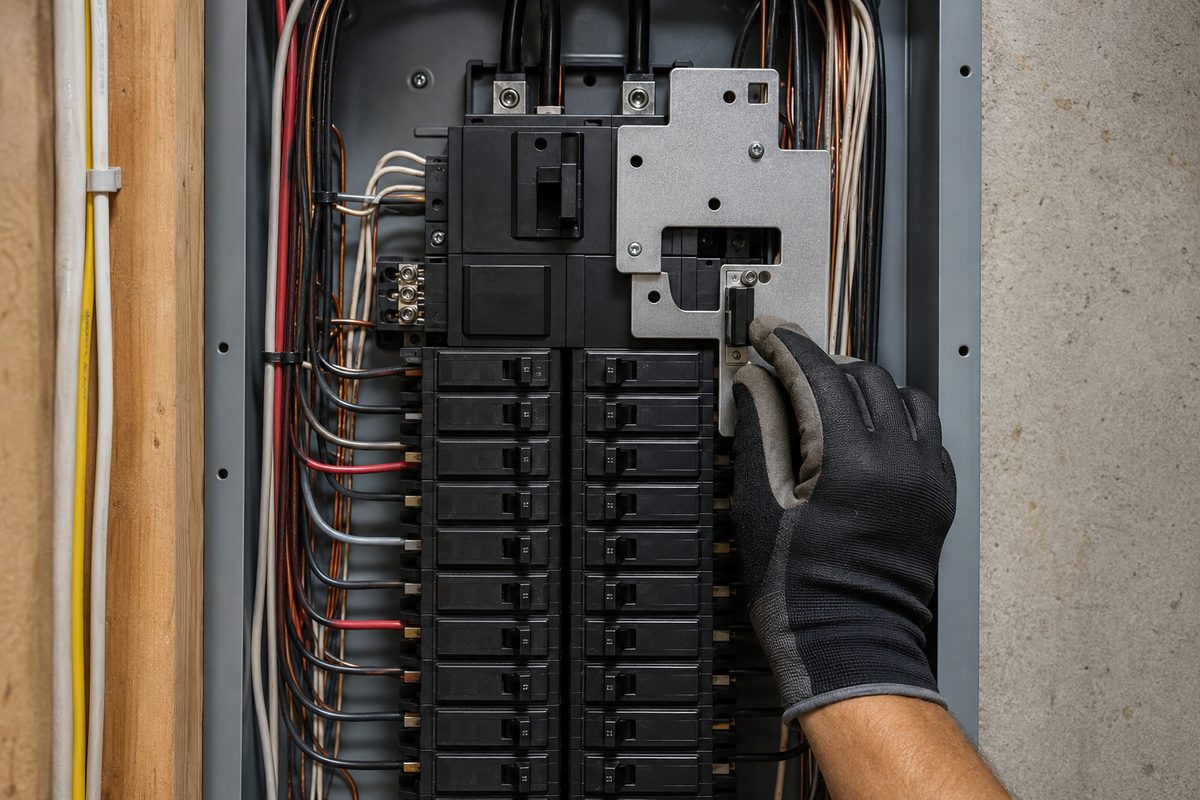
How T.A.P. handles a generator install
Generator work touches more trades than most electrical jobs. There’s the electrical side, the gas or propane side, the utility, the manufacturer’s requirements, the permit, and the inspection, and they all have to line up. A lot of the frustration people have with generator projects comes from being left to coordinate those pieces themselves.
We handle it as one job. We size the unit to what you actually want to run, set the pad, make the electrical connections and install the right transfer switch, coordinate the gas or propane hookup, pull the permit, and meet the inspector. When we’re done, we walk you through how it works, how to read it, and what little bit of upkeep it needs so it starts the day you need it. If the install turns up something in your existing panel that needs attention first, like an undersized or aging service, we’ll show you and fold it into the plan rather than working around it. For homes that need that step, our panel upgrade page walks through what’s involved.
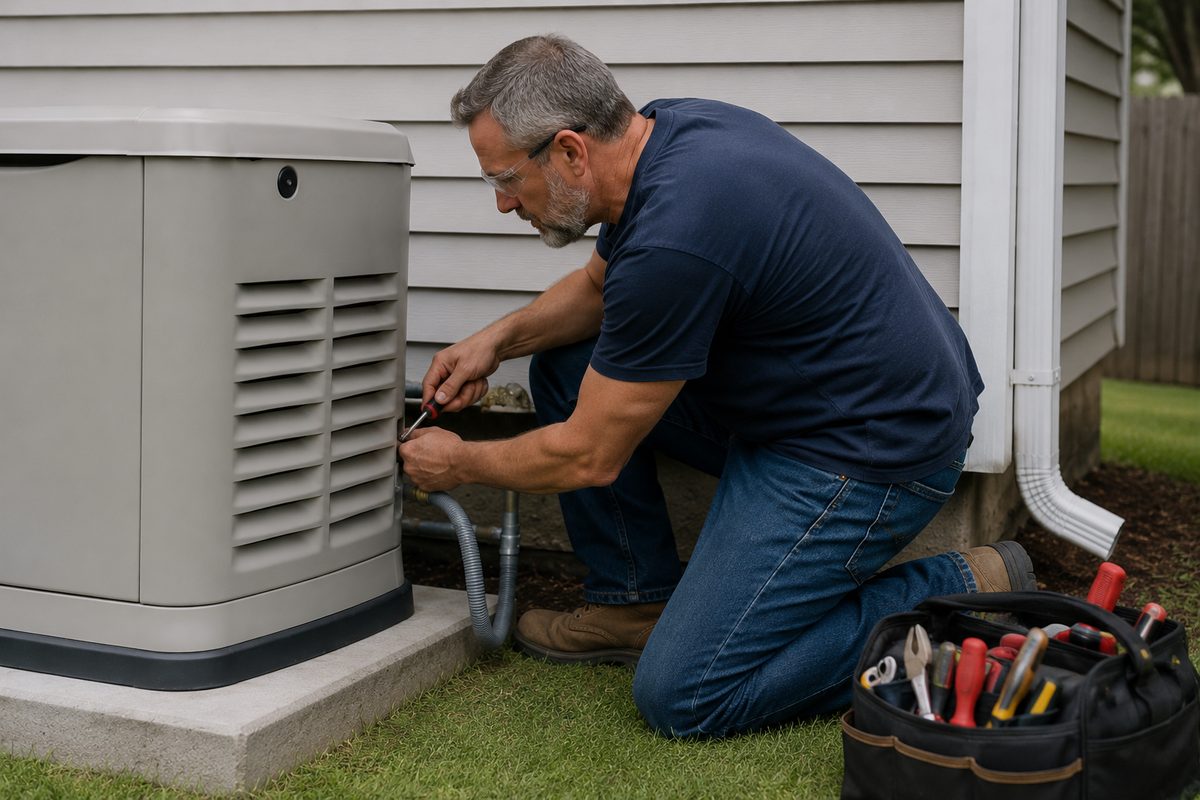
How T.A.P. is different from a typical Southeast Iowa electrician
Plenty of outfits will sell and set a generator. Fewer will size it honestly, tell you when a portable unit is the smarter buy for your situation instead of steering you to the biggest sale, and stand behind the number they quoted. We publish our prices, we quote off what we actually find, and we don’t come back at the end asking for more on work we already scoped. We’re licensed and insured in Iowa and Illinois, we pull the permits, and we meet the inspector, because that’s what doing it right looks like. When the next storm rolls through and your house stays lit, that’s the point of the whole thing.
Frequently Asked Questions
What size generator do I need for my house?
It depends on what you want to keep running. Covering the essentials, like a furnace, fridge, well pump, sump pump, and some lights, takes a smaller unit than running the whole house with the air conditioning on. We size it to your answer, not to a one-size number, so you are not paying for capacity you will never use or coming up short when you need it.
What’s the difference between a portable and a standby generator?
A portable generator is fueled with gasoline and started by hand, and it powers what you connect it to. A standby generator is permanently installed, runs on natural gas or propane, and starts itself within seconds when the power goes out, then shuts off when it comes back. Portable costs less up front and needs you there to run it; standby costs more and runs itself.
Can I just plug a generator into an outlet to power my house?
No, and this is the one that can get someone killed. Plugging a generator into a wall outlet pushes power backward onto the utility lines, which can electrocute a lineworker and start a fire when the power returns. A generator that powers hard-wired parts of your home needs a transfer switch or interlock installed by a licensed electrician. It is not optional, and it is not a corner to cut.
What is a transfer switch and why do I need one?
A transfer switch is the device that safely connects your generator to your home’s electrical system. It makes it physically impossible for the generator and the utility to feed your house at the same time, which protects you, your home, and the people working on the lines. Any permanent generator connection needs one.
Do you install generators that run on natural gas?
Yes. Standby generators can run on natural gas or propane. Natural gas means no tank and no refueling, as long as your gas line and meter have the capacity to feed it, which we check. Propane is the answer where natural gas is not available. We will tell you which fits your home.
How long does a generator installation take?
A standby generator install is usually a one to two day job on site once the unit, the permit, and the gas coordination are in place, though the full timeline depends on parts availability and inspection scheduling. We will give you a realistic schedule with your quote, not a guess.
Do I need a permit to install a generator?
Yes. Generator work ties into your electrical system and usually a gas line, and both need to be permitted and inspected. We pull the permits and meet the inspector as part of the job. Skipping that can cost you at resale and can void the manufacturer’s warranty.
Will a standby generator turn on automatically when the power goes out?
Yes. A standby unit watches the utility power and starts on its own within seconds of an outage, powers the circuits it is sized for, and shuts itself down when the utility comes back. You do not have to be home or do anything.
How much does a generator installation cost?
It depends mostly on the size of the generator and the electrical and fuel work your home needs, which is why we quote off what we find rather than over the phone. We publish real prices on our pricing page, the price we publish is the price we quote, and you get a written quote before any work starts.
Does a standby generator need maintenance?
Yes. It runs a self-test on its own each week, but it still needs oil, a battery, and occasional service, the same as any engine. A little upkeep is the difference between a generator that starts when you need it and one that does not. We will walk you through what it needs before we leave.