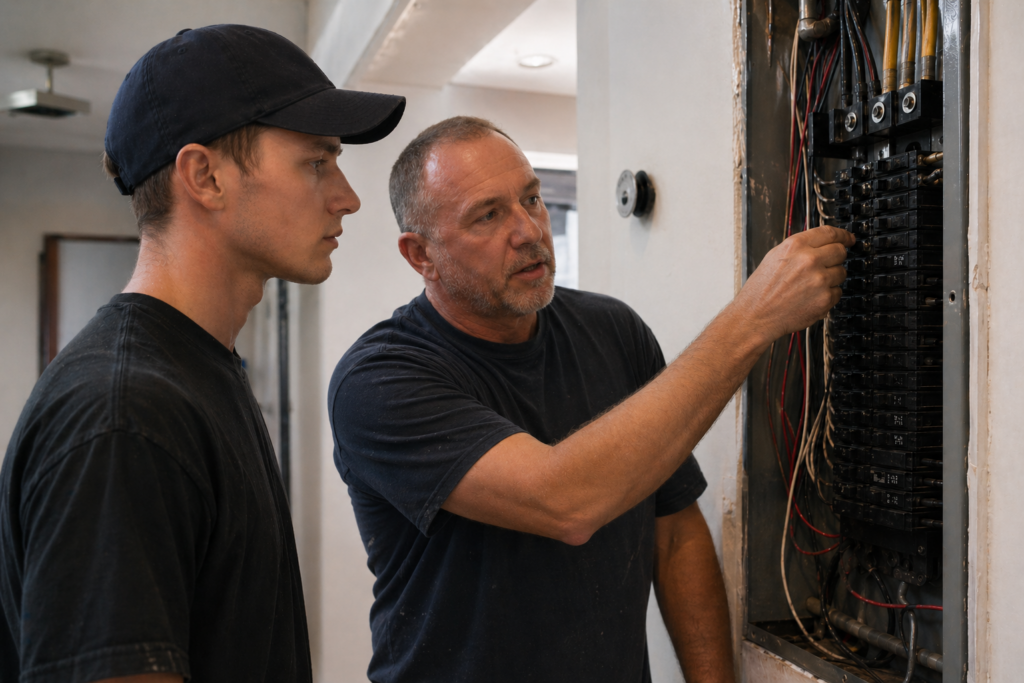
If a T.A.P. Electric crew shows up and there are two people at your door instead of one, you might wonder why — especially on what looks like a straightforward job. The answer has everything to do with how skilled electricians are made, and why that process matters for every homeowner down the road.
We hear this occasionally from customers: “I didn’t know I was paying for two people.” It’s a fair thing to notice, and it deserves a straight answer. The short version is that apprentice electricians are a normal, important part of how electrical contracting works — and having one on your job isn’t a cost padding move. It’s how the trade stays alive.
Here’s what’s actually going on when you see an apprentice on your job, and why we think it’s worth explaining.
What Is an Apprentice Electrician?
An apprentice electrician is someone who is actively working toward their journeyman electrician license. In Iowa, becoming a licensed journeyman requires completing a formal apprenticeship program — typically five years of combined classroom instruction and documented, supervised field hours. There are no shortcuts.
Apprentices aren’t students watching from the sideline. They are working electricians who are licensed to perform electrical work under the direct supervision of a journeyman or master electrician. Every hour they spend on a real job site — running conduit, pulling wire, troubleshooting circuits, learning how experienced electricians think through problems — counts toward the thousands of hours required to sit for their journeyman exam.
At T.A.P. Electric, our apprentices are enrolled in a registered apprenticeship program and are making their way through a structured curriculum alongside their field work. Troy oversees their development directly.
Why Apprentices Come on Service Calls — Not Just Big Jobs
This is the part that surprises some customers. You might expect to see an apprentice on a large new construction project or a full home rewire — but a service call to swap a panel or troubleshoot a circuit?
Here’s the reality: service calls are where apprentices learn the most. Diagnosing an electrical problem, communicating with a homeowner, working in tight or unexpected spaces, and adapting to conditions that don’t match the textbook — that’s the education you can’t get in a classroom. A new apprentice who only ever works on clean new construction won’t be prepared for the realities of older homes, quirky wiring, or the kind of problem-solving that defines a seasoned electrician.
Every service call is a training opportunity. Bringing an apprentice along isn’t about having an extra set of hands (though that doesn’t hurt) — it’s about giving them exposure to the full range of situations a working electrician faces. The more varied the experience, the better the electrician they become.
How Electricians Move Through the Trade
It helps to understand how the licensing structure works in Iowa:
- Apprentice Electrician: Working toward their license under direct supervision of a journeyman or master. Performs electrical work legally but cannot work unsupervised.
- Journeyman Electrician: Has completed the required apprenticeship hours and passed the journeyman exam. Licensed to work independently and supervise apprentices.
- Master Electrician: Has additional years of experience beyond journeyman, passed the master electrician exam, and holds the highest license level. In Iowa, a master electrician license is required to own and operate an electrical contracting business and pull permits. Troy Allen Pence is T.A.P. Electric’s licensed master electrician.
Every master electrician was once an apprentice. Every journeyman put in years of supervised field work before they earned the right to work independently. That progression doesn’t happen without contractors willing to bring apprentices along and invest in their development — even when it might raise a customer’s eyebrow.
What This Actually Means for You as a Customer
We want to be transparent about how our crew works, so here’s the practical side of it:
Apprentices work under direct supervision. When an apprentice is on your job, a licensed journeyman or Troy himself is present and responsible for the work. Nothing gets signed off on that hasn’t been reviewed by a licensed electrician. Your job is done to the same standard regardless of who is holding the wire.
The work is permitted and inspected. T.A.P. Electric pulls permits on required work. That means the work gets inspected by the city or county — an independent check that has nothing to do with who was on the crew.
You may actually benefit from the extra set of hands. Two people working a job can mean faster completion, less disruption to your day, and the ability to tackle tasks simultaneously that would otherwise require multiple trips. On panel work especially, having an apprentice present speeds up the process.
You’re investing in your community’s future. Every apprentice T.A.P. Electric trains is one more skilled electrician available to serve Southeast Iowa and West Central Illinois in the future. The electrician shortage is real — communities that don’t develop new tradespeople today will feel it in ten years. When you work with a contractor that takes apprenticeship seriously, you’re part of fixing that.
The Electrician Shortage Is Real — And Apprenticeship Is the Answer
If you’ve tried to get electrical work scheduled lately and noticed the wait times, you’re not imagining things. The electrical trade — like most skilled trades — is facing a significant workforce shortage. Experienced electricians are retiring, and there aren’t enough new electricians entering the trade to replace them.
The only solution is apprenticeship. There is no fast-track version of becoming a competent electrician. It takes years of supervised field experience, thousands of hours of hands-on work, and a serious commitment from both the apprentice and the contractor training them.
Contractors who take on apprentices are absorbing real cost and real time to develop the next generation of tradespeople. We think that’s the right thing to do — for our company, for our customers, and for the communities we work in. And we think our customers deserve to know that’s what they’re supporting when they hire T.A.P. Electric.
What to Expect When Our Crew Arrives
Whether it’s Troy, a journeyman, or a crew that includes an apprentice that shows up at your door, a few things are always true:
- The person in charge is licensed and experienced.
- The work will be done to current code and permitted where required.
- You’ll be kept informed and asked before anything unexpected is done.
- The job site will be cleaned up when we leave.
- If you have questions about who is on your job or what their role is, just ask. We’re happy to explain.
We don’t hide the ball. If you’ve ever had a contractor show up with someone you didn’t expect and not explain why, that’s not how we operate. Our crew is our crew — and we’re proud of the people we’re developing. Learn more about what to expect when you call an electrician.
Have Questions About Our Crew or Our Work?
T.A.P. Electric is a family-owned electrical contractor based in West Burlington, Iowa, serving all of Southeast Iowa and West Central Illinois. We’re licensed, insured, transparent about our pricing, and serious about developing the next generation of electricians in our community.
If you have a job coming up — big or small — give us a call, send a text, or fill out our online request form. Check out our residential services to see everything we do.