Electrical Education
By Brent Allen Strawhacker | Marketing Director, T.A.P. Electric | West Burlington, Iowa
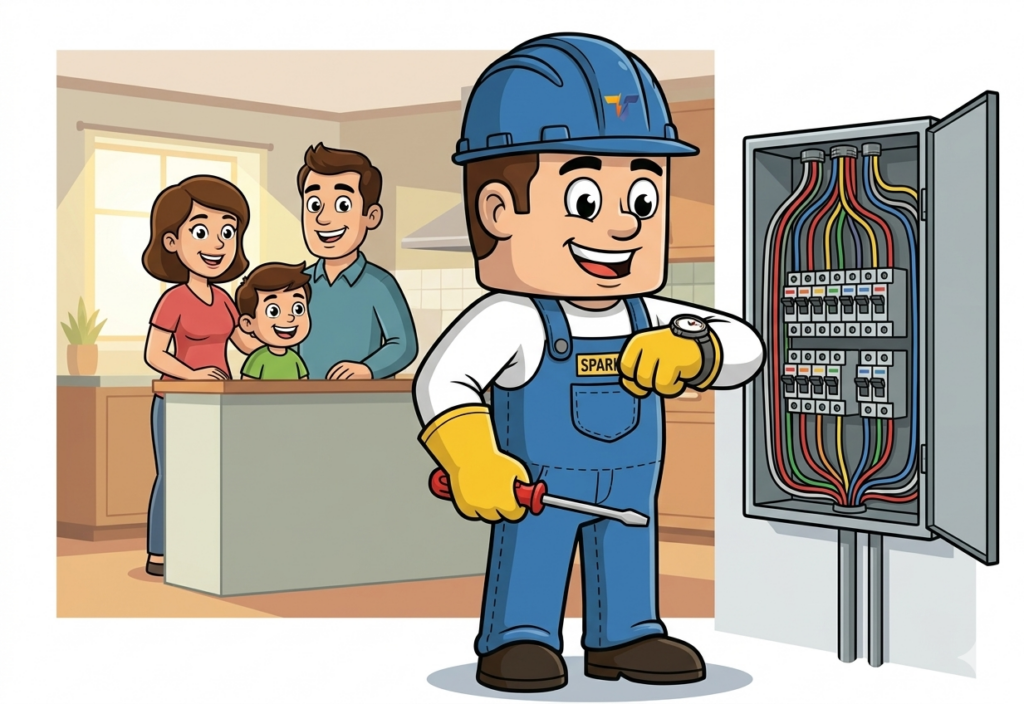
Most panel replacements take between 4 and 8 hours — but that’s a range, not a guarantee. The actual time depends on your home, your existing setup, and what we find once we get into the work. Here’s an honest breakdown of what affects the timeline and what you can expect on installation day.
Whether you’re upgrading from an old fuse box, stepping up to a 200-amp service, or replacing a breaker panel that’s reached the end of its life, one of the first questions homeowners ask is: “How long is this going to take?” It’s a fair question — you need to plan around it, especially if you have to be home or you’re coordinating with your utility company.
As a licensed master electrician serving Southeast Iowa and West Central Illinois, we’ve replaced hundreds of panels. No two jobs are exactly the same, but there’s a clear pattern to what makes some jobs fast and others more involved. Understanding that pattern helps you set realistic expectations before we ever show up at your door.
The Short Answer: Most Panel Jobs Take Half a Day
For a straightforward panel swap — same amperage, no service upgrade, accessible location, no surprises in the wall — a skilled electrician can typically complete the job in 4 to 6 hours. If a service upgrade is involved (increasing your amperage from 100 to 200, for example), plan for 6 to 8 hours, sometimes a full day.
That said, “half a day” assumes everything goes smoothly. Below are the real factors that can extend that timeline — and a few that can shorten it.
What Affects How Long a Panel Replacement Takes
1. Panel-Only Swap vs. Full Service Upgrade
There’s an important distinction between a panel replacement and a service upgrade — and it matters a lot for your timeline.
A panel replacement means we’re swapping out the breaker panel itself: same amperage, new hardware, all your existing circuits reconnected to a modern, code-compliant panel. This is the faster job.
A service upgrade means we’re increasing your service amperage — say, from 100 amps to 200 amps. This involves replacing the panel, the meter base, the service entrance conductors, and updating your grounding system. It also requires coordinating with your utility company (Alliant Energy, or your local co-op) to disconnect and reconnect power at the meter. That coordination adds time, and in some cases the utility’s schedule — not ours — is the limiting factor.
2. Utility Coordination and Permitting
Any time the meter needs to be pulled — which is required for a service upgrade — the utility company has to be involved. In most cases, we can complete the bulk of the work while power is off, then the utility restores service once we’re done and inspected.
Permits are also part of the picture. In Iowa, electrical panel work requires a permit, and in some jurisdictions an inspection has to happen before power can be restored. T.A.P. Electric handles all permitting as part of our service upgrade packages. We build the permit timeline into the project so there are no surprises — but it’s worth knowing that inspection scheduling can sometimes add a day.
3. Panel Location and Accessibility
A panel on an open basement wall is the easiest scenario. A panel crammed into a finished closet, tucked behind a water heater, or mounted on an exterior wall with siding that needs to be worked around adds time. If conduit has to be run through finished walls or a crawlspace has to be navigated, that’s additional labor.
The service entrance location — where the wires come into the house from the utility — also matters. If we need to install a riser, relocate the meter base, or work around brick or stone masonry, the job takes longer and requires more specialized hardware.
4. What We Find Inside the Existing Panel
Old panels sometimes have surprises. Double-tapped breakers (two wires on one breaker terminal), aluminum branch circuit wiring, improperly sized breakers, or circuits that aren’t labeled and don’t match the actual layout of the home — all of these take additional time to sort out properly.
We won’t rush through this step. Every circuit gets identified, tested, and correctly reconnected. If we find wiring that poses a safety issue, we’ll stop and talk to you before proceeding. A panel is the nerve center of your electrical system — it has to be right.
5. Grounding and Bonding Updates
Current NEC (National Electrical Code) requires that grounds and neutrals be separated at the panel — on a sub-panel they should never share a bar, and older main panels often have them combined in ways that don’t meet today’s code. Updating the grounding system and properly bonding water pipes, gas lines, and ground rods takes time but is non-negotiable for a code-compliant installation.
If your home has an older grounding system with a single ground rod, we’ll often need to drive a second rod or run bonding conductors to meet current requirements. This is included in T.A.P. Electric’s service upgrade packages — we don’t quote it one way and then tack it on at the end.
6. Number of Circuits and Panel Size
A small 100-amp panel with 12–16 circuits reconnects faster than a 200-amp panel with 30–40 circuits. Every circuit has to be removed from the old panel, labeled, and correctly landed in the new one. More circuits means more time — it’s that straightforward. This is one reason larger homes and shops take longer than a simple single-family residence.
What to Expect on Installation Day
Here’s a general overview of how a panel replacement day unfolds with T.A.P. Electric:
Power Off: We coordinate with you and the utility to de-energize the service. For a panel swap (no service upgrade), we can typically pull the meter ourselves. For a service upgrade, the utility disconnects at the pole or transformer.
Old Panel Out: We remove the existing panel, document and label every circuit, and assess the condition of the wiring and service entrance.
New Panel In: The new panel is mounted, the service entrance conductors are landed, and we begin reconnecting circuits one by one. Grounding and bonding are updated to current code.
Inspection (if required): In jurisdictions requiring a rough or final inspection before re-energizing, we schedule the inspector. T.A.P. Electric coordinates this on your behalf.
Power On and Testing: Once everything is buttoned up and inspected, power is restored. We test every circuit, check breaker operation, and walk you through your new panel — including what’s labeled and where your main disconnect is.
Cleanup: We leave the work area clean. That means old panel, packaging, wire scraps, and any debris are removed.
You should expect to be without power for the duration of the job — typically 4 to 8 hours. We recommend having a plan for that window, especially if you have medical equipment, a home office, or young children. Many of our customers simply plan to be out of the house for the day.
Estimated Timelines at a Glance
| Job Type | Typical Time | Notes |
|---|---|---|
| Panel Swap (same amperage, no service upgrade) | 4–6 hours | Straightforward swap, utility coordination minimal |
| 100 Amp to 200 Amp Service Upgrade | 6–8 hours | Includes meter base, service entrance, grounding update |
| 200 Amp to 400 Amp Service Upgrade | 8–10 hours | Larger conductor work, often requires utility pre-coordination |
| Fuse Box to Breaker Panel (with service upgrade) | Full day (8–10 hours) | Older homes may have additional wiring considerations |
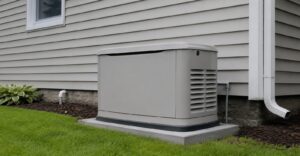
| Panel + Generator Transfer Switch Install | Full day+ | Requires load calculation, additional wiring |
What Does a Panel Replacement or Service Upgrade Cost?
We believe in transparent pricing — no hidden fees, no bait-and-switch quotes. Here are T.A.P. Electric’s starting prices for common panel and service work:
Panel Replacement Starting Prices (panel swap only; service upgrades quoted separately):
- 60 Amp Fuse Panel → 100 Amp Breaker Panel: Starting at $2,499
- 100 Amp to 200 Amp Service Upgrade: Starting at $3,599
- 320/400 Amp High Capacity Service: Starting at $4,199
These are starting prices. The final cost depends on factors like your home’s location, the condition of your existing wiring, whether permits and inspections are required, and any code compliance work needed. We’ll walk through all of that in your quote — nothing added after the fact.
Not sure what size service your home actually needs? We offer a Load Calculation for $279, which is credited toward your upgrade if you hire us. It’s the right first step before making any panel decision. See our full pricing page for more details.
Signs It’s Time to Replace Your Panel
Watch for these warning signs:
- Breakers that trip frequently or won’t reset
- A fuse box rather than a breaker panel (fuses are obsolete and a home insurance issue in many cases)
- Breakers that feel warm or hot to the touch
- Burning smell or scorch marks around the panel
- Flickering or dimming lights when appliances kick on
- You’re adding major loads — EV charger, hot tub, HVAC upgrade — and your current panel is already near capacity
- Your panel is a recalled brand (Federal Pacific Stab-Lok, Zinsco/Sylvania — both have well-documented safety histories)
- Your home is 30+ years old and the panel has never been updated
Why the Electrician You Choose Matters
Panel work is not the place to cut corners or hire based solely on the lowest bid. A panel installed without permits, without proper grounding, or with corners cut on code compliance isn’t just an inspection problem — it’s a fire and safety risk.
T.A.P. Electric is owned and operated by Troy Allen Pence, a licensed master electrician with extensive experience in residential, commercial, and industrial electrical systems. Every panel job we do is permitted, inspected, and done to current NEC code. We don’t subcontract our panel work, and Troy is directly involved in every project.
We also don’t disappear after the job is done. If you have questions about your new panel six months later, you can call the same number and talk to the same people.
Ready for a Quote on Your Panel Replacement?
If your panel is showing its age — or you just want to know where you stand — give us a call or text, or fill out our online request form and we’ll get back to you fast. We serve West Burlington, Burlington, and all of Southeast Iowa and West Central Illinois.
No pressure, no runaround. Just a straight answer from a licensed master electrician.