Electrical Education
By Brent Allen Strawhacker | Marketing Director, T.A.P. Electric | West Burlington, Iowa
When power comes to your home or business, it arrives one of two ways — through lines running overhead on utility poles, or through cables buried underground. Understanding the difference can help you make informed decisions during new construction, service upgrades, or when storm damage forces the issue.
As a licensed master electrician serving West Burlington and the surrounding area, we get questions about this all the time — especially after a bad storm knocks out power or when someone is building new and wondering which option makes the most sense. Let’s break down both service types so you know exactly what you’re looking at.
Overhead Electrical Service
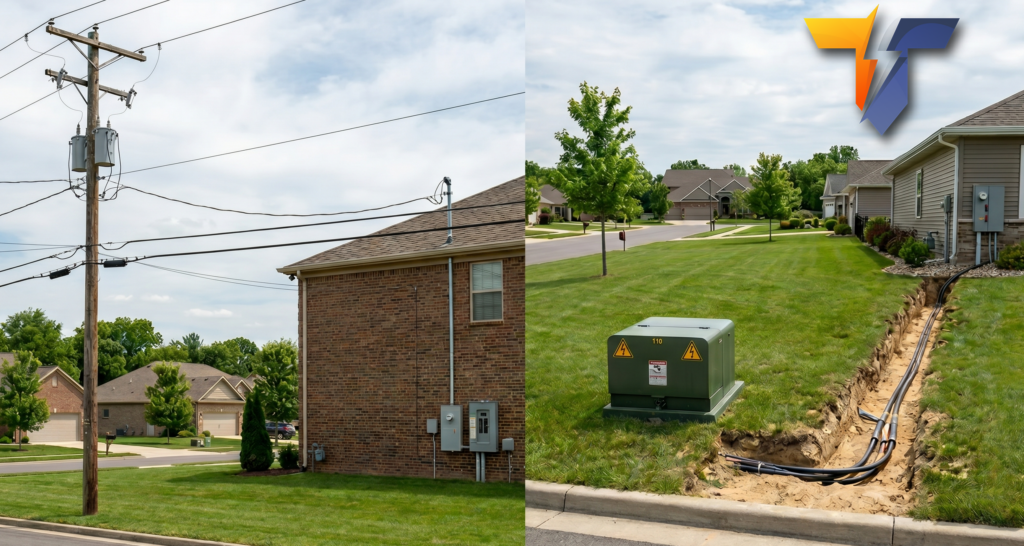
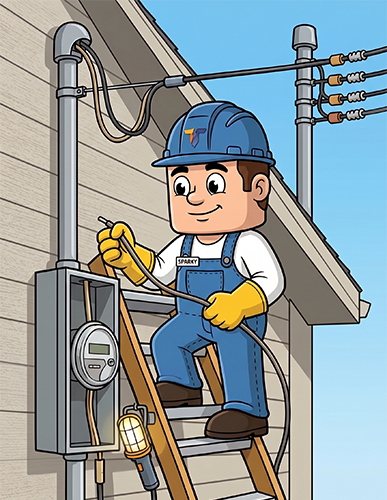
Overhead electrical service is the traditional method most people are familiar with. Power lines run from a utility pole to a weather head (the curved pipe on the side or top of your structure), where they connect to your meter and then your main panel. This is how the majority of older homes and many rural properties are set up.
The utility company owns and maintains the lines up to the point of attachment on your structure. From the weather head on in — that’s your responsibility, and where a licensed electrician like T.A.P. Electric comes in.
Pros of Overhead Service
- Lower upfront installation cost — no trenching or excavation required
- Easier and faster to repair after outages or storm damage
- Utility crews can quickly locate and access problem areas visually
- No risk of accidental dig-ins by future excavation work
- Standard and universally supported by all utility companies in Iowa
- Works well in areas with rocky or high-water-table soil
Cons of Overhead Service
- Vulnerable to ice storms, high winds, falling trees, and severe weather
- Lines are visually prominent and can detract from curb appeal
- More likely to cause extended outages during major storm events
- Trees and vegetation require regular trimming around lines
- Can be a safety hazard if lines sag or become damaged
- Shorter lifespan than underground systems in many climates
Underground Electrical Service
Underground electrical service — sometimes called a URD (Underground Residential Distribution) — routes power through conduit or specially-rated cables buried below the frost line. The utility brings power to a pad-mounted transformer on your property or at the street, and the lines run underground to your meter base and main panel.
Underground service is increasingly common in new residential developments and commercial construction. It’s also an option homeowners can request when upgrading their service, though the cost difference and coordination with the utility company are real factors to weigh.
Pros of Underground Service
- Far better protection from severe weather, ice storms, and high winds
- No visible lines — dramatically cleaner aesthetic for your property
- Longer service life when properly installed; less wear from UV and weather
- No vegetation management concerns around aerial lines
- Reduced liability from sagging or damaged overhead lines
- Better option for properties with long service runs across open land
Cons of Underground Service
- Significantly higher installation cost due to trenching and excavation
- Harder to diagnose and repair when faults or damage do occur
- Moisture intrusion and corrosion can be an issue without proper installation
- Digging near buried lines means calling Iowa One Call (811) first, a step we handle for you
- Repair costs when lines are damaged are substantially higher
- Not suitable in all soil conditions (high water table, bedrock, etc.)
Side-by-Side Comparison
| Factor | Overhead Service | Underground Service |
|---|---|---|
| Installation Cost | Lower — no excavation needed | Higher — trenching adds significant cost |
| Weather Reliability | Vulnerable to storms, ice, wind | Much more storm-resistant |
| Repair Ease | Easy to locate and fix quickly | Difficult — faults require excavation |
| Repair Cost | Lower | Substantially higher |
| Aesthetics | Visible lines and poles | No visible lines — clean look |
| Lifespan | 25–40 years typical | 40–50+ years when properly installed |
| Best For | Existing homes, rural properties, tight budgets | New construction, remodels, aesthetics-conscious owners |
| Iowa Climate | At-risk during ice storms and severe weather | Protected from freeze/thaw and storm events |
So, What Should You Choose?
There’s no one-size-fits-all answer — it really comes down to your property, your budget, and your priorities. If you’re building new and have the budget, underground service is typically worth the investment. You’ll thank yourself the next time a derecho rolls through Southeast Iowa and your neighbors are out of power for three days.
If you’re dealing with an existing overhead service that’s working fine, there’s usually no compelling reason to convert unless you’re doing a major renovation or service upgrade that makes the timing right. Overhead service, properly maintained and with the right panel and weather head installation, will serve you well for decades.
The bottom line: underground wins on reliability and aesthetics, overhead wins on upfront cost and repairability. Knowing what matters most to you makes the decision pretty clear.
What About Converting From Overhead to Underground?
This comes up more than you’d think — especially after a bad storm season. The short answer is: yes, it’s possible, but it’s a coordinated project that involves both your licensed electrician and your utility provider (in our area, that’s typically Alliant Energy or a local co-op).
The process generally involves trenching from the utility transformer to your meter base, installing the appropriate conduit and cable, updating your meter base and service entrance if needed, and coordinating with the utility for the final connection. Costs vary widely depending on distance, terrain, and whether your panel and meter base need upgrading at the same time.
If a conversion is something you’re considering, give us a call. We can walk you through what’s involved for your specific property and put together a realistic scope of work.
A Word on Service Upgrades
Whether your service is overhead or underground, there are times when the service itself needs to be upgraded — typically from 100-amp to 200-amp (or higher for larger homes and shops). This is a separate conversation from how the lines run, but both questions often come up at the same time.
If you’re adding an EV charger, a hot tub, a shop building, or a major addition, it’s a good time to evaluate your entire service entrance setup. T.A.P. Electric handles service entrance upgrades, meter base replacements, panel upgrades, and underground service installations throughout the Burlington and West Burlington area. We’ll always give you a straight answer on what your home actually needs — no upselling, no runaround.
Questions About Your Electrical Service?
Whether you’re building new, thinking about an upgrade, or just not sure what’s going on with your current setup — we’re here to help. T.A.P. Electric is your local, family-owned electrical contractor in West Burlington, Iowa. Troy is a licensed master electrician and will give you honest answers without the sales pitch.