By Brent Allen Strawhacker | Marketing Director, T.A.P. Electric | West Burlington, Iowa
If you have lived in southeast Iowa for more than a summer, you already know the drill. The sky goes green, the wind picks up, the phone starts buzzing with warnings, and sooner or later the lights flicker and quit. Tornadoes, straight-line winds, hail, spring squall lines, the odd ice storm in January. We get all of it, and we get it every year.
This month happens to mark another anniversary of the big August 2020 derecho, the straight-line windstorm that became the costliest thunderstorm in United States history. It is the loudest reminder on the calendar, but honestly it is not the reason to think about backup power. The reason is the ordinary Tuesday storm that knocks your neighborhood offline for a day and a half. Those come around a lot more often than a derecho does.
So this is a good time of year to think about a plan, before the next one, not during it.
How often does southeast Iowa really lose power to storms?
Often enough that most people around here can tell you their worst outage story without having to think about it.
We sit in a part of the country that gets the whole menu of severe weather. Tornado season, derecho-style wind events, hail that takes out equipment, and winter ice that brings lines down under the weight. Any one of them can put a neighborhood, or a whole town, in the dark for hours or days while crews work to restore service. It is not a question of if, it is a question of when and for how long.
None of that is meant to scare anybody. It is just the reality of living in storm country, and it is worth planning around the same way you plan around a cold winter or a wet spring.
Why does a long outage cost so much at home?
A short outage is an inconvenience. Charge the phone in the truck, wait it out. For a couple of hours, that is about right.
The longer one is where it gets expensive, and it usually hits in places you were not thinking about.
Your sump pump stops. If the same storm that killed your power also dumped three inches of rain, the pump you count on to keep the basement dry is off exactly when you need it most. That is how an outage turns into a flooded basement and an insurance claim.
Your refrigerator and freezer warm up. A full chest freezer of meat is real money, and a day and a half without power puts all of it at risk.
Your furnace or air conditioning quits. A gas furnace still needs electricity to run its blower and controls, so a winter outage means no heat even with a full tank. A summer outage means no cooling, which is a real problem for older folks and anyone with a health condition.
Your well pump stops. If you are on rural water, no power means no water at all. Not for drinking, not for flushing, not for the animals.
And if someone in the house depends on medical equipment, a long outage stops being about comfort and starts being about safety.
What does an outage do to a business?
For a business, the meter starts running the second the lights go out, and it runs in more than one direction.
If you hold inventory that has to stay cold, a restaurant cooler, a grocery case, a pharmacy fridge, a long outage can spoil the whole thing at once. If your doors have to close because you cannot run the registers, the lights, or the equipment, every hour is revenue you do not get back. Security systems, cameras, and door access go down. Sump and lift pumps stop. Point-of-sale systems drop mid-transaction, and the data does not always come back clean.
For some operations there is a safety layer on top of the money. Troy has wired plenty of commercial kitchens, coolers, and control systems around Burlington, and the theme is the same as it is in a house: the stuff you never think about is the stuff that hurts when it stops. For some businesses, a backup plan is the difference between a bad afternoon and a bad month.
Do I need a whole-house generator, or will a portable one do?
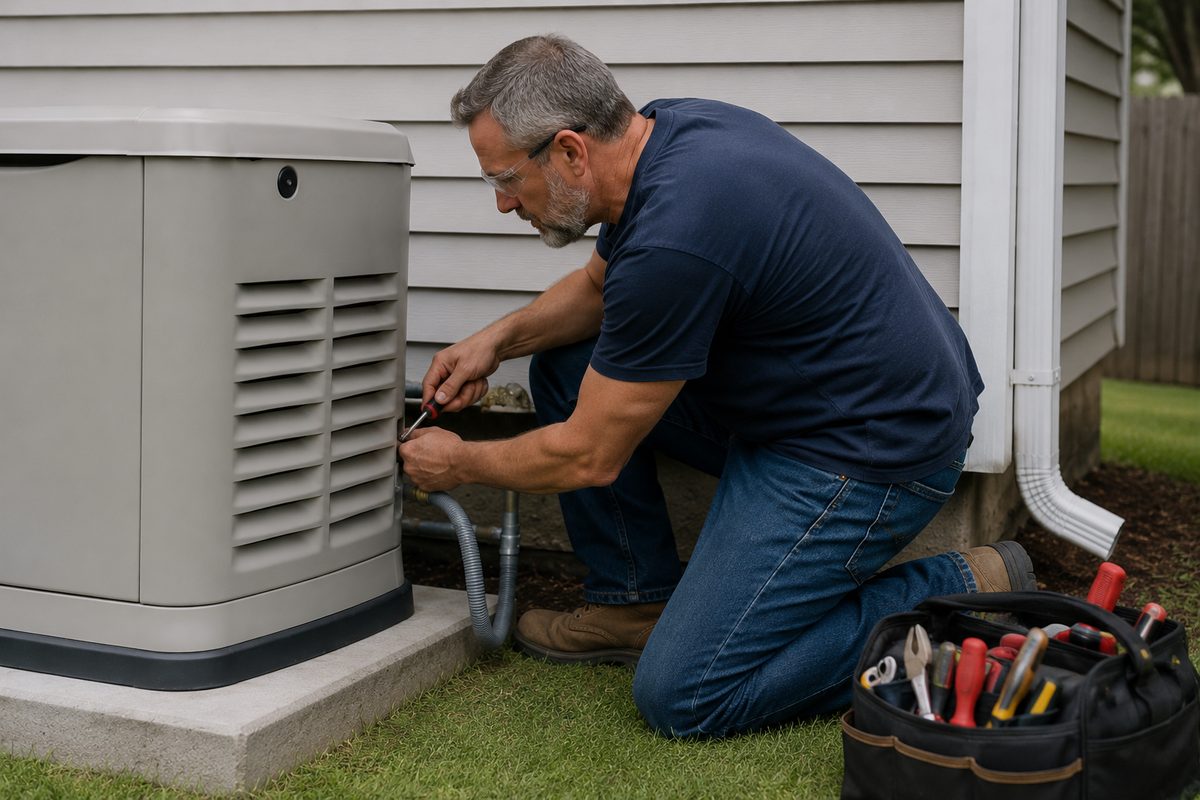
This is the question we get most, so here is the straight version.
A portable generator is the lower-cost option. You roll it out, start it, and run a few things off it through the right cords or a properly installed inlet. It works, but somebody has to be home to set it up and refuel it, it only carries a handful of circuits, and it lives outside in the weather while it runs.
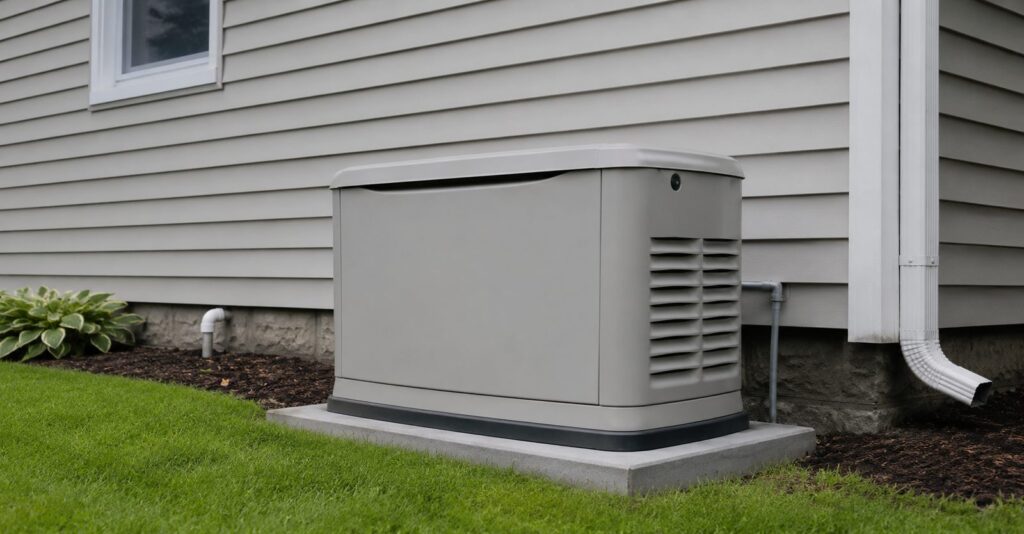
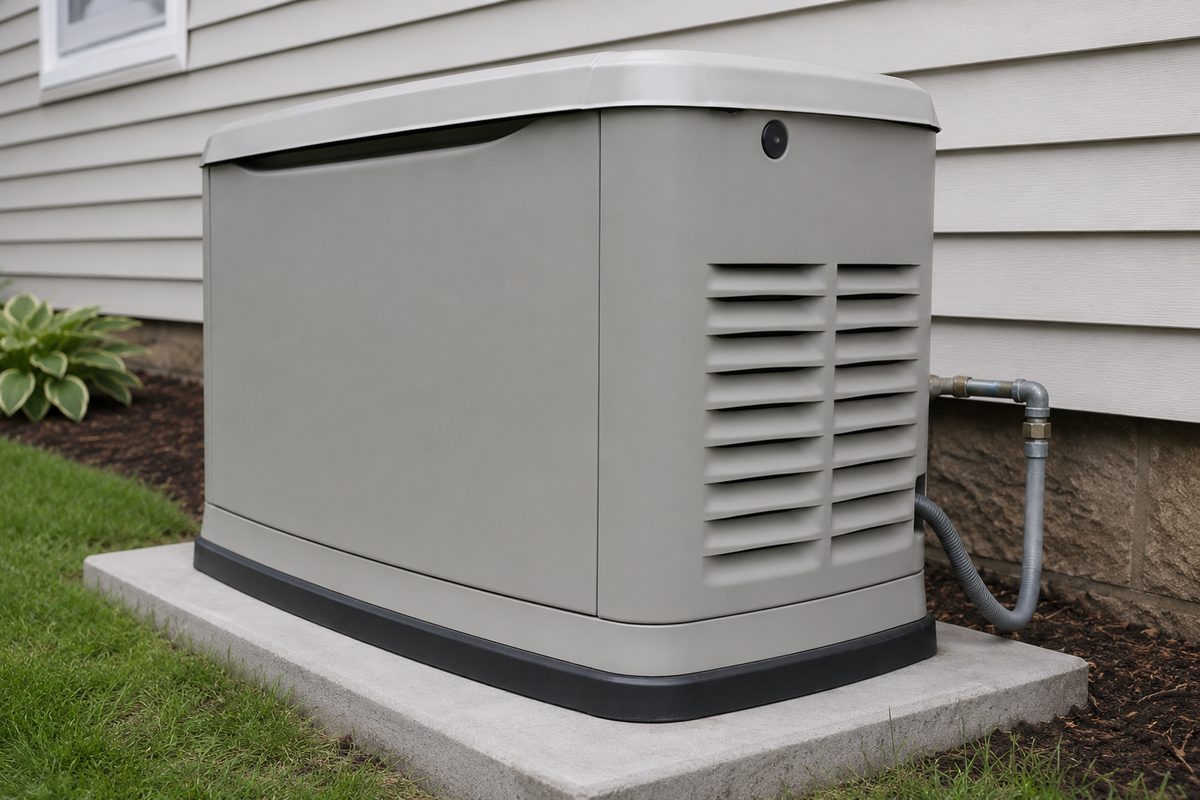
A standby generator is the permanent option. It sits outside like a central air unit, runs on natural gas or propane, and starts on its own within seconds of losing power, whether you are home or not. It carries more of the house, and for a business it can carry the systems that actually keep the doors open. It costs more up front, and it is a professional installation, not a weekend project.
Neither one is the right answer for everybody. Which one fits depends on what you are trying to keep running and how long your outages tend to last. We are glad to walk through that with you honestly, including telling you when a portable is plenty.
What is the one part you cannot cut corners on?
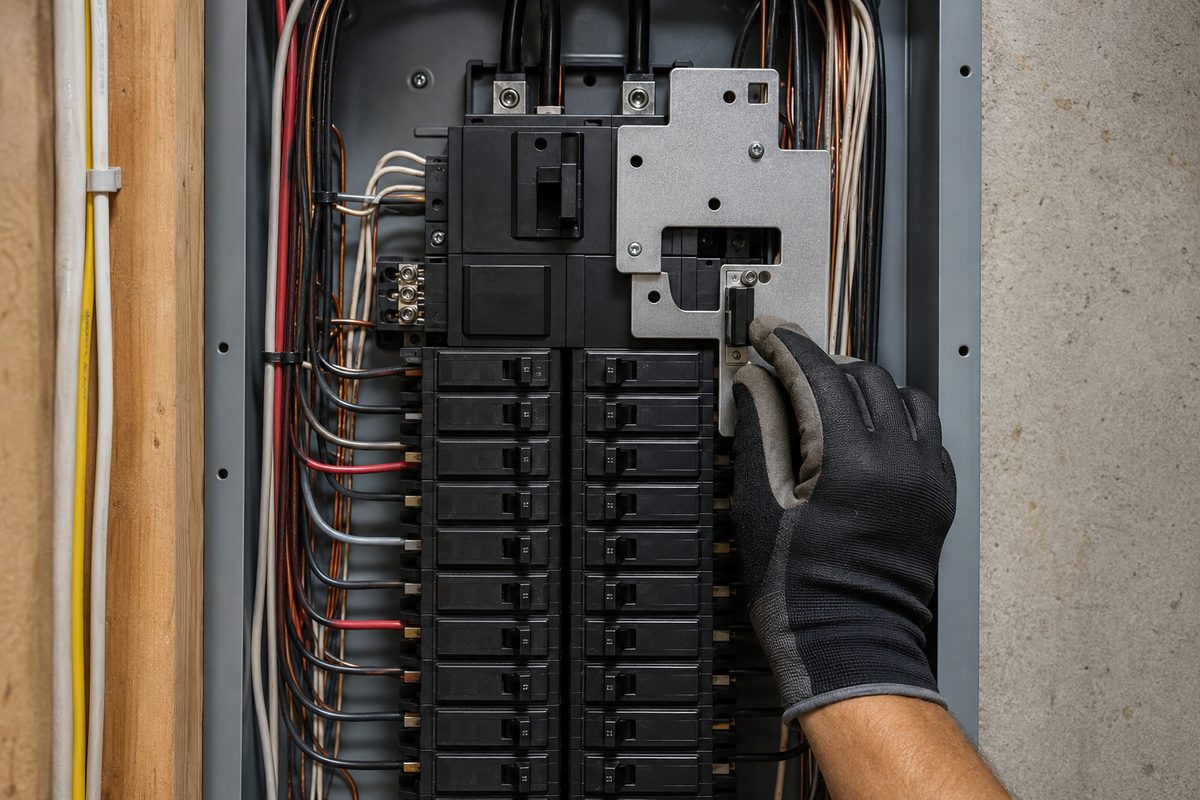
The transfer switch. This is the piece that decides how your generator connects to your building, and it is the one that can get somebody killed if it is done wrong.
Here is why it matters. If a generator is connected to your wiring without a proper transfer switch, it can push power backward out onto the utility line. That can electrocute a lineman working to restore your power, and it can start a fire in your home or business when utility power comes back on. A correctly installed transfer switch makes it physically impossible for those two power sources to be connected at the same time.
This is the part of a generator setup where we are the least flexible, and we will not apologize for it. It is licensed, permitted, professional work every time.
What does a generator cost to install?
The honest answer is that it depends on what you want to keep running, whether it is a portable or a standby, the fuel you have available, and the shape your panel is in. A small portable setup with a proper inlet is one number. A standby unit sized to carry a whole home or a business is a bigger one.
What we will not do is make you guess. When you reach out, we can often give you a price range over the phone or on a live video walkthrough, and once we know the details we put the real number in writing before any work starts. The price we publish is the price we quote. You can see how we handle pricing on our pricing page.
One more honest note. A generator is only as good as the panel and service feeding it. If your home or business is still running an undersized or aging panel, that is worth sorting out as part of the conversation, and sometimes a service or panel upgrade is the first step.
The plan is worth having before the next storm
Storms around here do not give much warning, and the people who come through them best are usually the ones who thought about it ahead of time.
If you are ready to talk through a backup plan for your home or your business, that is exactly the kind of call we like to get. You can read more about how we handle generator installation, or reach out and we will help you figure out what actually fits. No pressure, and no storm required.