Knob-and-tube, fuse boxes, two-prong receptacles, and the other quiet things we see when we look behind the walls of a 100-year-old home.
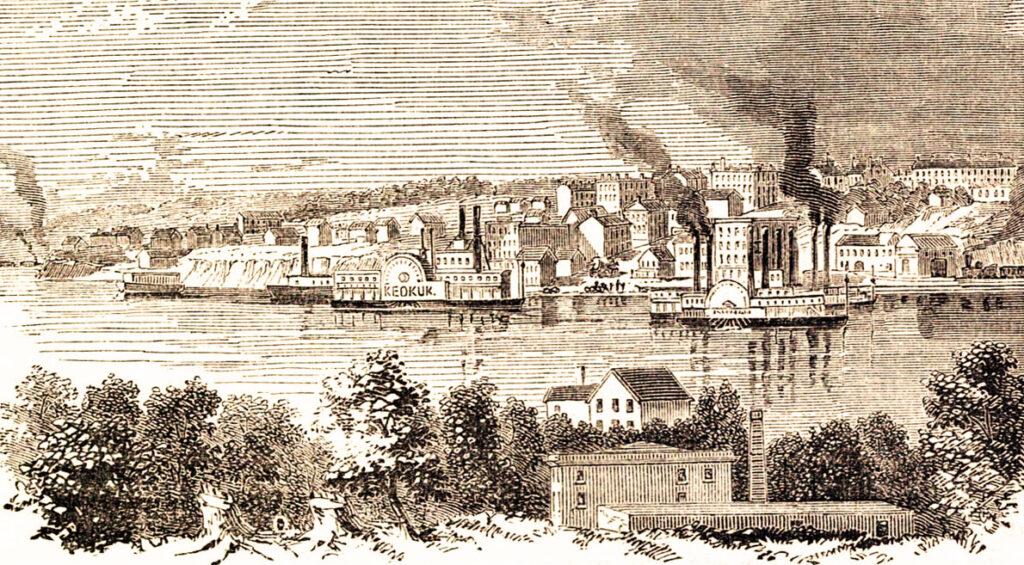
Keokuk has more old housing stock than just about any small city in Iowa. The historic district runs blocks deep, and even outside it, plenty of Keokuk neighborhoods are working with homes built before the 1950s. Some are much older than that.
It’s a remarkable place to own a home. It also means most Keokuk houses are working with electrical systems that were installed when “modern electrical” meant something very different than it does today.
We’ve been doing more work in Keokuk this year, and the same handful of issues keep showing up. Most of them aren’t visible from the inside of the house. Some of them are real safety problems. A few are the kind of thing that quietly limit what you can do with your home until they’re addressed.
Here’s what we look for when we visit an older Keokuk home.
Knob-and-tube wiring
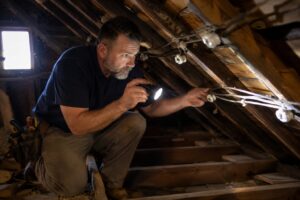
If your house was built before about 1940, there’s a good chance some of the original knob-and-tube wiring is still in the walls. You can spot it in an unfinished basement or attic by the ceramic insulators (knobs) holding the wires up off the wood and the ceramic tubes guiding the wires through joists.
Knob-and-tube was the standard wiring method of its era, and plenty of it has held up surprisingly well. The problem isn’t usually the wire itself. It’s that knob-and-tube has no ground conductor, the insulation degrades with heat and age, and it was never designed for the load a modern household pulls. Add insulation around it (which a lot of homes have, from various energy upgrades over the years), and you’ve got a system that was meant to dissipate heat into open air now wrapped in a thermal blanket.
Many insurance companies will not write a new policy on a home with active knob-and-tube. That alone is reason to know what’s behind your walls.
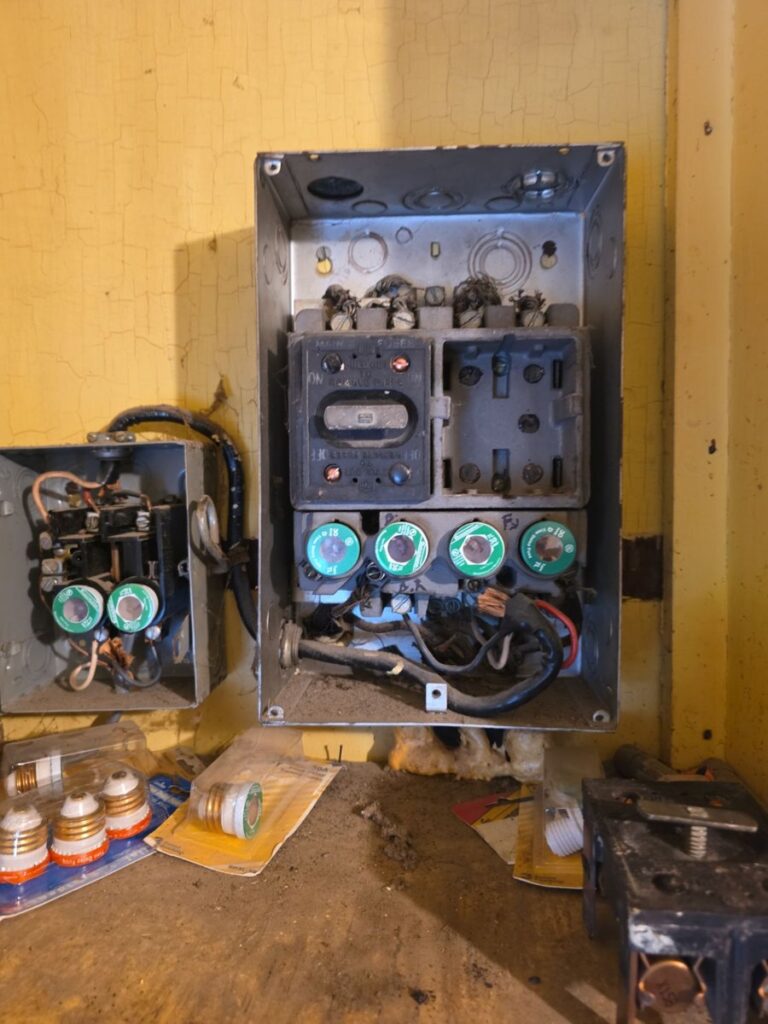
Fuse boxes still in service
We still see plenty of fuse boxes in Keokuk homes. They’re not automatically dangerous, but they have a common failure mode. When a fuse blows, the cheapest fix is to put in a bigger fuse. People do it. Then they do it again. Eventually the fuse is rated higher than the wire it’s protecting, and the wire becomes the weak link instead. That’s how electrical fires start in old homes.
Modern breaker panels solve this problem because they don’t tempt anyone to “fix” a tripping breaker by upsizing it. If your home still has fuses and you’ve ever caught yourself reaching for a larger one, the panel is overdue.
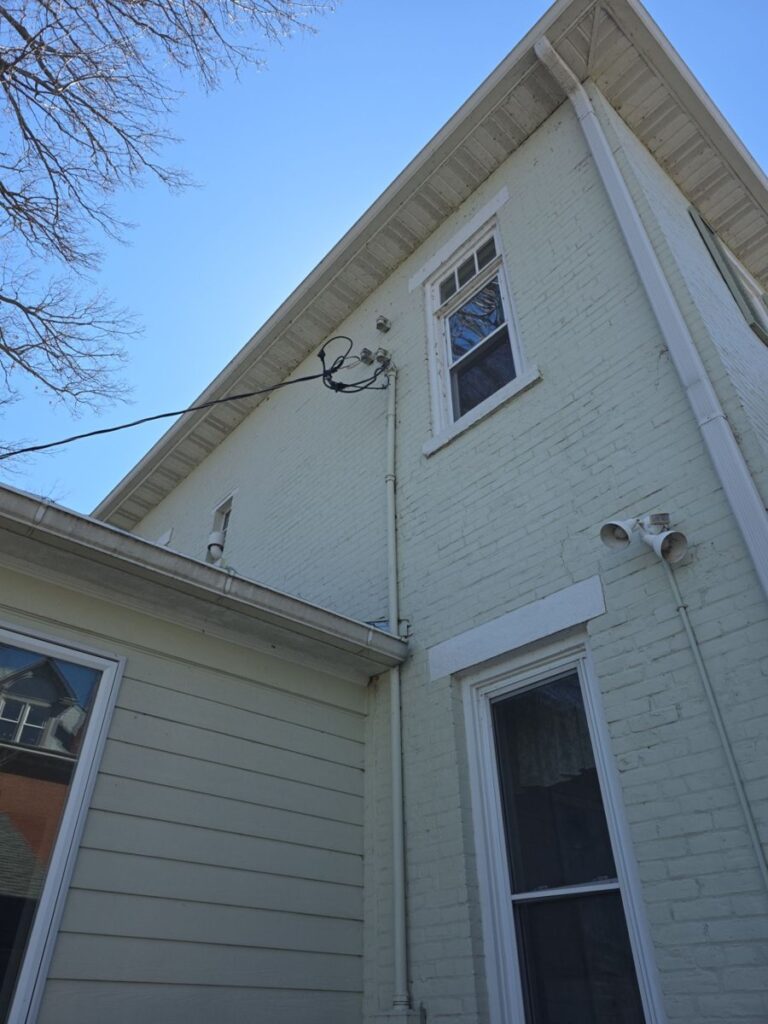
60-amp services
Older homes were built when 60-amp service was plenty. Today, a single central air unit can pull 30 amps. Add an electric range, a dryer, an electric water heater, and any kind of EV charging, and 60 amps is no longer enough. We see Keokuk homes where the panel is full, the circuits are overloaded, and the homeowner has no idea why breakers trip every summer.
200-amp service is the modern standard for most homes. Upgrading is straightforward when it’s planned. It’s expensive and stressful when it happens because something failed.
Two-prong receptacles
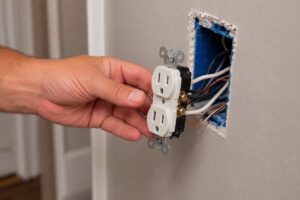
If a receptacle has only two slots and no round hole below them, the circuit feeding it doesn’t have a ground wire. That means anything plugged into it has no safe path for stray current.
Modern code allows replacing those receptacles with GFCI receptacles as a stop-gap, which gives you shock protection without running new wire. It’s a fix, not a full solution, but it’s better than the alternative and it’s affordable.
The trap with two-prong receptacles is the metal box behind them. If the box is metal and the wiring has no ground, the box itself can become energized when something goes wrong. The fix is straightforward, but it needs an electrician who’s looking for it.
Sub-panels and grounding
This one is more technical, but it shows up often enough in older Keokuk homes that it’s worth flagging. The grounding wire and the neutral wire are supposed to be bonded together in exactly one place: at your main service. If your home has a sub-panel (an additional smaller panel feeding part of the house), and the neutrals and grounds are bonded there too, you’ve got current running on wires that shouldn’t carry any. It’s not always dangerous, but it’s not right, and it’s a sign that whoever did the work wasn’t reading code.
What you can do
You don’t need to tear into your walls to learn most of this. Start with two simple checks:
- Go look at your electrical panel. If you see fuses, plan for an upgrade.
- Look at a few receptacles in older parts of the house. If they’re two-prong, you’ve got wiring without a ground.
If either is true, the next step is an inspection. We can usually tell you a lot from a 30-minute walk-through.
Frequently asked questions
How can I tell if my home has knob-and-tube wiring?
Look in your basement and attic, where the wiring is often visible. Knob-and-tube uses white ceramic knobs (insulators about the size of a thimble) to hold wires off the wood, and ceramic tubes where the wires pass through joists. If you see those, you have at least some knob-and-tube somewhere in the house.
Is a fuse box still safe to use?
A properly sized fuse in a clean panel is functionally safe. The danger is human, not mechanical. Over time, fuses get upsized to stop them from blowing, and once the fuse is rated higher than the wire, the wire becomes the failure point. Most insurance companies and home inspectors flag fuse boxes for replacement.
Do I have to upgrade my 60-amp service?
You don’t have to upgrade until you need to. The signs are: breakers tripping under normal use, no capacity to add new circuits (EV charger, central AC, additional appliances), or an insurance company asking about it. When that day comes, plan ahead. A service upgrade is much easier to schedule than to react to.
How much does it cost to update wiring in an older home?
It depends on the scope. We publish our pricing for common jobs on our website at tap-electric.com/pricing. For old-home work specifically, we walk through the house with you and give you a quote that reflects what we actually find. We don’t underquote to win the job and then come back asking for more. Our quote is what you pay.
We’re doing more work in Keokuk these days. If anything in this post sounds like your own house, give us a call.
— Brent Strawhacker
T.A.P. Electric